
Hildene’s gardens and gracious rooms tell one side of the Lincoln family’s story. But Hildene secrets and stories lead into more complicated territory: a son’s controversial decision to have his mother committed, a daughter’s elopement against her parents’ wishes, and a supposed curse linking Robert Todd Lincoln to three presidential assassinations.
Some of these stories unfolded long before Robert built his Vermont retreat; others involve the descendants who followed him there. Together, they reveal the private dramas behind a very public name. Along the way, we’ll explore documented events, disputed accounts, and a few tales whose truth is harder to pin down—including whether Peggy’s grandmother really offered her a small fortune to stop flying.
📜 What Was in the Private File Found at Hildene?
Among the family papers discovered at Hildene was a bundle tied with a ribbon containing records of one of the Lincoln family’s most painful controversies. As a National Park Service history of the property recounts, the papers concerned Robert Todd Lincoln’s decision to have his mother declared insane. Decades after mother and son were gone, the documents brought their private turmoil back into public view.
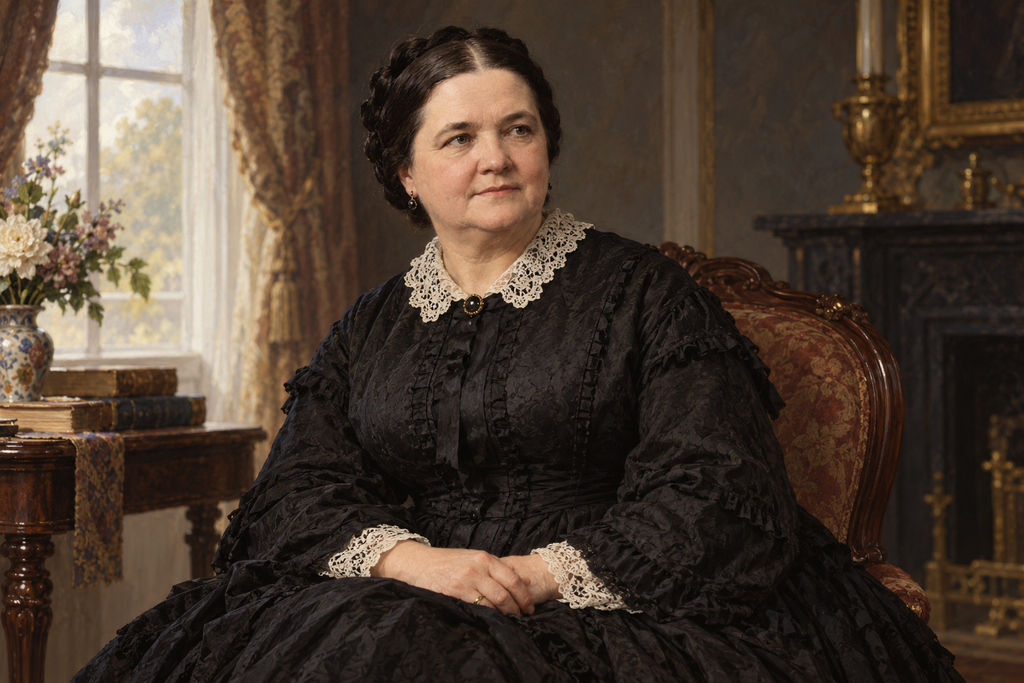
In 1875, Robert initiated a hearing over Mary Todd Lincoln’s mental condition. According to the National Park Service’s account, he feared that her behavior could lead to tragedy. The court ruled against Mary, committing the former first lady to a private institution in Illinois. Robert also gained control of her finances—a circumstance that adds another uncomfortable layer to an already troubling family story.
Mary did not remain confined for long. Within four months, she was released into her sister’s care, and a second trial declared her legally sane in 1876. That reversal leaves an unsettling question: had Robert acted out of necessary concern, or had his mother been subjected to a devastating injustice?
The papers preserved at Hildene cannot make that question simple. They offer evidence of Robert’s reasons for acting, but his perspective is only part of the story. For readers looking beyond the distinguished family portraits, this is a revealing place to begin: a famous name offered no protection from bitter conflict within the family.
🎩 Was Robert Todd Lincoln Cursed?
The man who built Hildene had an unsettling connection to three presidential assassinations. His father, Abraham Lincoln, was murdered in 1865. Sixteen years later, Robert was nearby when President James Garfield was shot. Then, in 1901, he arrived in Buffalo just after an attack on President William McKinley. It is easy to see how that sequence became a story about a curse.
As the National Park Service explains, however, the familiar claim that Robert witnessed all three shootings stretches the truth. He had declined his parents’ invitation to Ford’s Theatre and reached his father after the attack. When Garfield was shot at a Washington railroad station, Robert was about forty feet away and rushed to help. In McKinley’s case, Robert learned of the shooting when his train reached Buffalo and subsequently visited the wounded president.
The connections were real; the supposed curse was an interpretation. Robert’s family name and government positions brought him into contact with presidents far more often than most Americans. Even so, knowing the circumstances does little to make the pattern feel less eerie.
The story acquired another flourish: Robert supposedly avoided presidential gatherings afterward, fearing that his presence brought disaster. Yet in 1922, he attended the dedication of the Lincoln Memorial alongside President Warren G. Harding. The often-repeated remark about his being bad luck at presidential functions also lacks direct evidence, according to the Park Service.
Perhaps that is what makes this tale so persistent. The embellished version is easy to question, but underneath it remains an extraordinary coincidence—one that hardly needed help becoming a legend.
💍 Why Did Jessie Lincoln Elope Against Her Parents’ Wishes?
A distinguished family name did not guarantee that the Lincoln children would follow their parents’ plans. In 1897, Robert’s younger daughter, Jessie Lincoln, eloped with Warren Beckwith, a young man her parents did not approve of. A Harlan family historical newsletter identifies Beckwith as a classmate and football star at Iowa Wesleyan and records that the marriage took place over her parents’ objections.
There is an irresistible contrast here: the granddaughter of Abraham Lincoln choosing a marriage her family opposed, with a famous surname adding public interest to a private disagreement. The elopement is documented; the conversations behind it are harder to recover. Without those conversations, we cannot know precisely what objections were voiced—or what Jessie said before deciding to marry anyway.
The marriage ended in divorce in 1907, but its connection to Hildene endured through their children, Mary Lincoln “Peggy” Beckwith and her younger brother, Robert. Hildene’s account of family life describes the children spending time with their grandparents at the estate, where they rode ponies, sailed toy boats, and played on the grounds.
Peggy eventually made Hildene her permanent home. The daughter of a marriage her grandparents had opposed became the granddaughter entrusted with their beloved retreat—a family turn of events worth pausing over.
✈️ Did Peggy’s Grandmother Offer Her $10,000 to Stop Flying?
If Jessie’s elopement challenged the family’s expectations, her daughter Peggy found another way to raise eyebrows: she learned to fly airplanes. A published account of Peggy’s life describes her taking up aviation in the late 1920s and having an airstrip built in Hildene’s meadowlands. Apparently, the estate offered possibilities her grandparents had never anticipated.
That same account repeats a delightful local legend: Mary Harlan Lincoln supposedly offered her granddaughter $10,000 to give up flying. Whether the concern was safety, propriety, or some combination of the two is unclear. But the image of a grandmother attempting to negotiate an adventurous granddaughter back onto solid ground has obvious staying power.
There is a snag in the story, however. The writer notes that Mary died in 1937, while Peggy reportedly purchased her last airplane sometime in the late 1930s. Those dates make the familiar version difficult to fit together neatly. Was an earlier offer remembered incorrectly? Did the amount grow in the telling? Or was the entire bargain simply too good a story to leave untold?
The supposed payment remains a legend, but Peggy’s enthusiasm for aviation gives it a believable setting. Here was a Lincoln descendant with the means and determination to pursue an unconventional interest—and, according to the tale, a grandmother willing to put a considerable price on keeping her grounded.

🧬 Did the Lincoln Family Line Really End?
Peggy’s brother, Robert Todd Lincoln Beckwith, is generally remembered as Abraham Lincoln’s last undisputed descendant. But “undisputed” is doing considerable work in that sentence. Behind the familiar family-tree ending lies a paternity dispute involving a young wife, a contested inheritance, and a child given the middle name Lincoln.
As a New Yorker investigation reported, Beckwith’s wife, Annemarie, maintained that he fathered her son, Timothy, born in 1968. Beckwith denied paternity, citing medical evidence of sterility. The disagreement became entangled with divorce proceedings and the child’s potential claim to the Lincoln family trust.
Was Timothy a Lincoln heir—or a child bearing a famous name without the biological connection? Annemarie declined court-ordered blood tests for herself and her son. The court ruled against her in the divorce, but its finding did not prevent Timothy from making a future inheritance claim.
After Beckwith’s death in 1985, the institutions designated to receive the remaining trust funds reached a financial settlement with Timothy. That agreement cleared the way for the inheritance to be distributed, but it did not establish his biological parentage.
This is where a tidy family history becomes an unresolved story. A settlement can put a financial dispute to rest without answering the question that interests everyone else. The accepted Lincoln family tree ends with Peggy’s brother; the controversy leaves readers wondering whether that final branch was quite as final as it appears.
That raises an obvious question: could DNA testing settle the matter? The court proceedings described above involved proposed blood tests, which Annemarie declined, rather than modern DNA testing. Although genetic researchers have investigated the wider Lincoln family, I found no reliable public report of a DNA result resolving Timothy’s parentage. That does not rule out private testing, but it leaves us without a publicly verified answer to the question that makes this story so intriguing.

🗝️ What Do These Stories Change About Hildene?
After these stories, Hildene becomes a different sort of place to consider. Robert Todd Lincoln was both the man who created this Vermont retreat and the son whose decision about his mother remains troubling to read. Jessie’s place in the family includes an elopement her parents opposed, while Peggy brings an adventurous streak—and a flying legend that refuses to fit neatly into the calendar.
Knowing these stories gives the family portraits more complicated faces. A room associated with Robert may bring to mind the private papers preserved at the estate. Peggy’s connection to the grounds may prompt thoughts of airplanes and a grandmother’s supposed bargain. Beyond the house, the disputed ending of the Lincoln family line leaves a question that the familiar family tree cannot entirely put to rest.
Some mysteries become less mysterious when the evidence is examined; others retain their uncertainty. Hildene offers both. Its stories give us reasons to look beyond a famous surname and wonder about the people who carried it—their choices, their disagreements, and the things they preferred to keep private.
🔗 Discover More About Hildene
These family dramas and lingering questions offer one perspective on Hildene and the Lincoln family. Explore the estate’s broader history or plan a visit to the home where some of these stories unfolded.
- Hildene: The Lincoln Family Home in Manchester, VT
- Visit & Tour Guide: Hildene, The Lincoln Family Home— Explore what to expect and how to plan your visit