The Stories People Tell About This Place
Every historic property has a documented history. Dates, names, architectural details, and important events help tell the official story. But beyond the exhibits and guided tours are the stories people tell about the place itself—local legends, visitor experiences, persistent rumors, unexplained mysteries, and tales passed down through generations. Some of these stories are well documented. Others exist somewhere between fact and folklore. Together, they add another layer to the experience and help explain why certain places continue to capture our imagination long after we leave.
These are the stories people tell about the Mount Washington Resort.
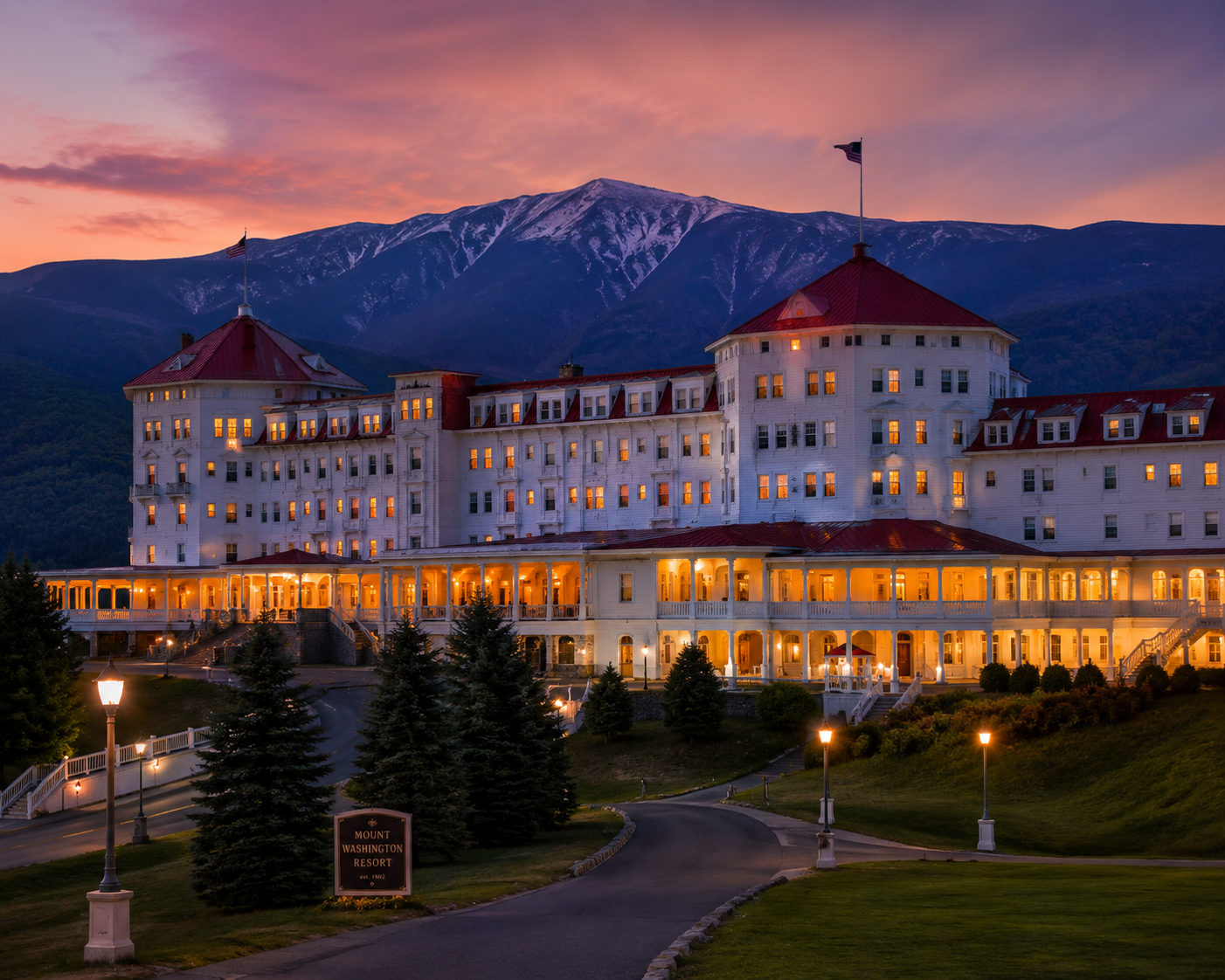
While the grand architecture and sweeping views of the Mount Washington Resort in Bretton Woods, New Hampshire, have drawn travelers for more than a century, the real intrigue often lies beyond the official history. Behind the stories of railroad tycoons and international conferences are tales of high-society rivalries, secret speakeasies, and a resident spirit who may have refused to check out.
If you think historic landmarks are only about dates and artifacts, welcome to the unofficial guest ledger of the Mount Washington Resort—where the elite bent the rules and the past sometimes refuses to stay buried.
👑 The Princess’s Private Scandals: Vanity and Extravagance
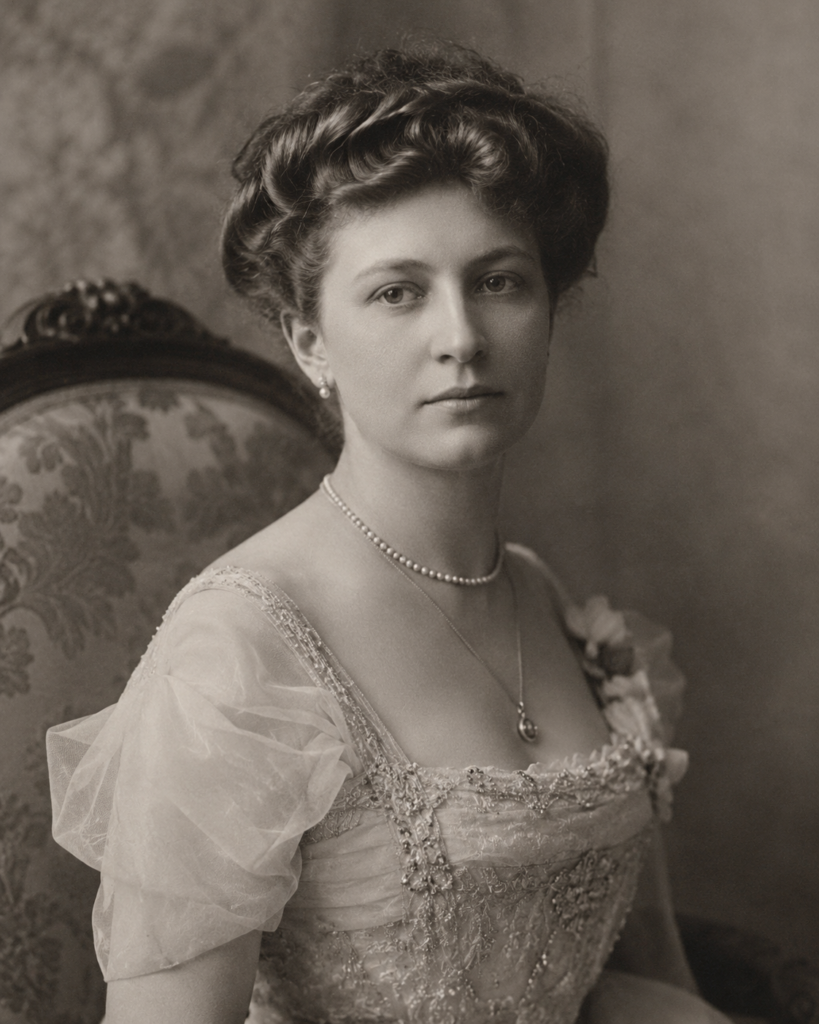
When most visitors think about the Mount Washington Resort, they picture the grand white façade, sweeping mountain views, and elegant public spaces. Yet few individuals left a greater impression on the property than Carolyn Stickney, later known as Princess Carolyn. Following the death of her husband, railroad magnate Joseph Stickney, Carolyn inherited immense wealth and became one of the most recognizable figures associated with the resort. Over the years, stories about her lifestyle, personality, and habits have become woven into the hotel’s folklore. Whether every detail is true is impossible to know today, but the stories continue to be told more than a century later.
The Veranda Wardrobe Wars
The resort’s famous veranda stretches hundreds of feet across the front of the hotel and offers commanding views of both the mountains and arriving guests. During the Gilded Age, however, the veranda served another purpose—it was one of the most important social stages in New England. According to one enduring hotel legend, Princess Carolyn frequently positioned herself where she could observe arriving visitors. Wealthy families traveled long distances to spend summers at prestigious resorts, and appearances mattered. Fashion, status, and social standing were often displayed as openly as the luggage being unloaded from arriving carriages.
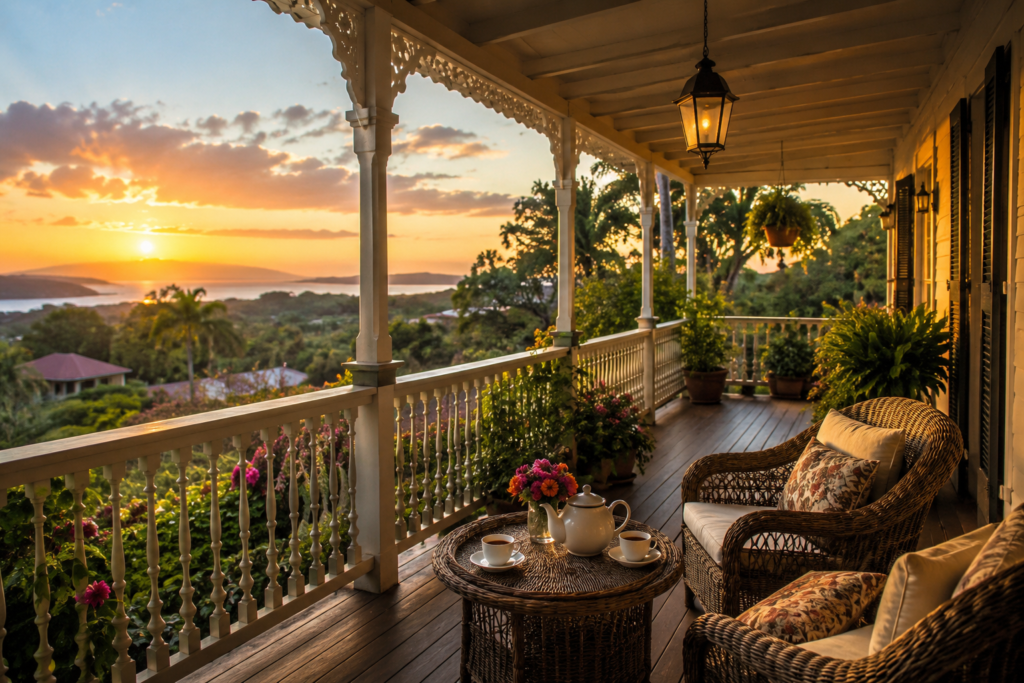
The story claims that if Carolyn spotted another woman arriving in a particularly impressive gown, she would quietly excuse herself and retreat to her suite. Before long, she would reappear wearing something even more elaborate. Whether the tale is completely accurate or has grown with each retelling, it perfectly captures the competitive social atmosphere of the era. Today, visitors relaxing on the veranda may find it easy to imagine those long-ago summers when America’s elite gathered to see—and be seen.
The Portable Throne
Among the most persistent stories surrounding Princess Carolyn is her reported refusal to sleep in any bed but her own. While many wealthy travelers carried trunks filled with clothing and personal items, legend suggests Carolyn took luxury to another level entirely. According to local lore, she insisted on traveling with her massive custom-made four-poster bed. The bed became one of her most recognizable possessions and symbolized the extraordinary lifestyle enjoyed by America’s wealthiest families during the early twentieth century. Whether the story has been embellished over time or not, the image is unforgettable: a railroad heiress and future princess transporting an enormous carved bed between residences because ordinary accommodations simply would not do.
The story survives because it reflects something visitors quickly learn about Carolyn. She was not content to blend into the background. She cultivated an image of elegance, exclusivity, and status that matched the grandeur of the resort itself.
The Royal Cash Grab
Perhaps no story generated more gossip than Carolyn’s marriage to French Prince Jean Baptiste Marie de Faucigny-Lucinge. To many observers, the match seemed like something pulled from the pages of a society newspaper. Almost immediately, rumors began to circulate. Some claimed the prince gained access to American wealth, while Carolyn gained the prestige and glamour of a royal title. Whether fair or not, the whispers followed the couple for years.
The truth was undoubtedly more complicated than the rumors suggested. Yet gossip has always been part of high society, and few people attracted more attention than a wealthy American widow who suddenly became a princess. Even today, the marriage remains one of the most talked-about chapters in Carolyn’s story. It transformed her from a prominent resort hostess into a figure of international fascination and helped cement her place in the legends of the Mount Washington Resort.
👻 Room 314: The Guest Who Never Checked Out
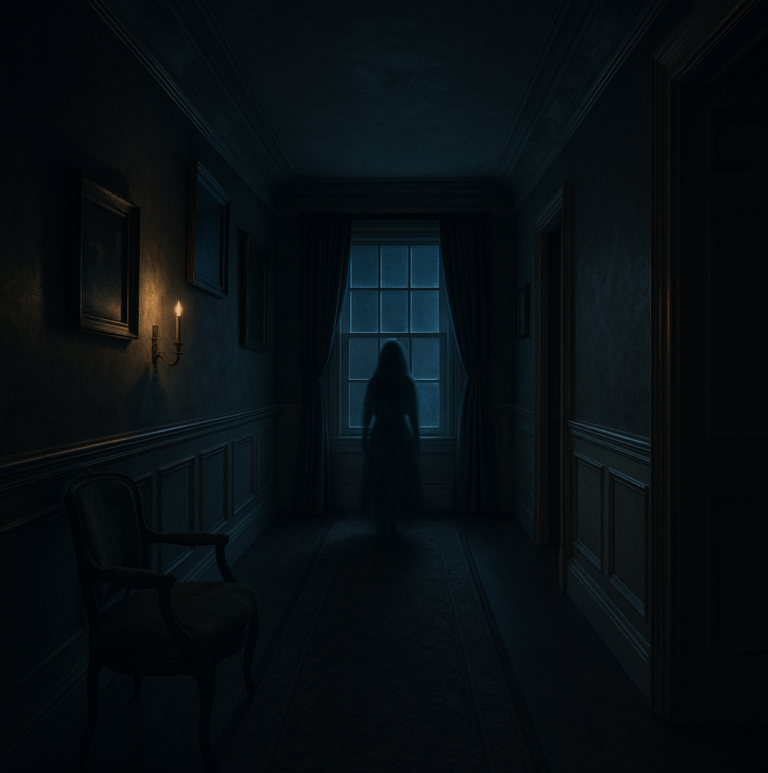
No story associated with the Mount Washington Resort is repeated more often than the legend of Princess Carolyn’s lingering presence. While the hotel is known for its grand architecture and mountain views, many visitors arrive having already heard whispers about Room 314 and the woman who supposedly never left. Whether viewed as a ghost story, local folklore, or simply part of the property’s charm, tales of Princess Carolyn have become woven into the identity of the resort itself. Staff members, tour guides, and guests have shared stories for decades, creating a legend that seems to grow with each passing year.
The Phantom Mirror Reflection
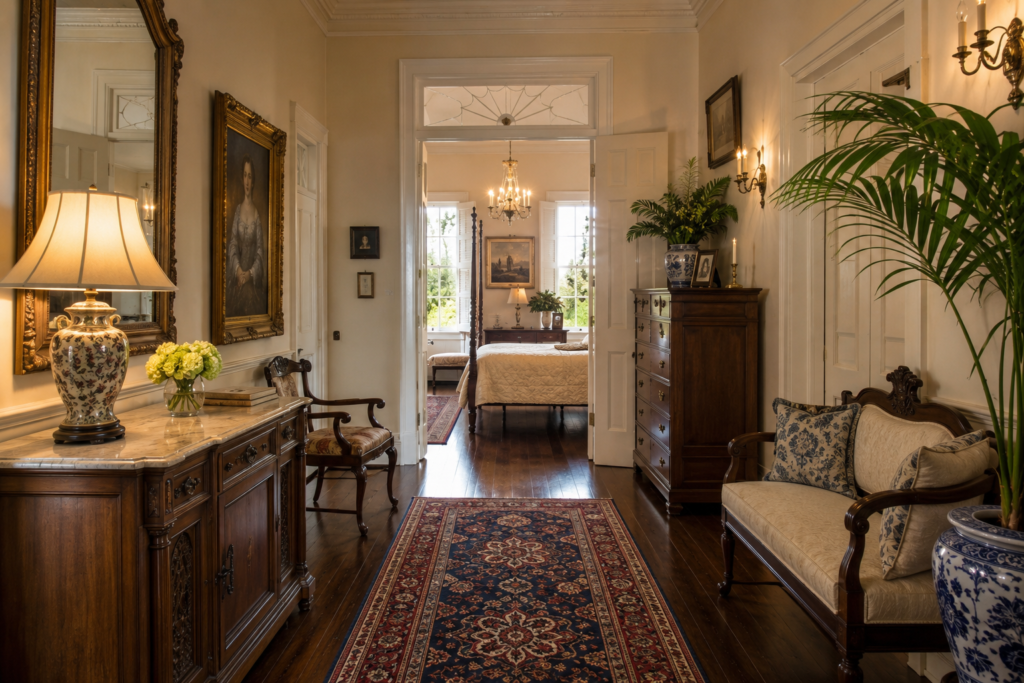
Among the most frequently repeated stories are reports of a woman in Victorian clothing appearing in mirrors or reflected surfaces. Guests have occasionally described hearing soft whispers during the night or sensing that someone else was in the room, only to discover they were alone. As with most ghost stories, details vary depending on who is telling them. Some claim to have seen a figure sitting quietly near the bed. Others describe catching only a brief glimpse of movement reflected in a mirror before it vanished. No photographs or evidence have ever confirmed these encounters, yet the stories continue to circulate among visitors.
Part of the fascination may come from the room itself. Knowing that Princess Carolyn spent considerable time at the resort makes it easy for the imagination to wander. In a historic hotel filled with original woodwork, antique furnishings, and long hallways, even ordinary sounds can seem mysterious after dark.
The Invisible Perfume
Not every story involves a visual sighting. One of the most common accounts describes the sudden appearance of a strong floral fragrance in otherwise empty hallways or guest rooms. Guests often report catching the scent unexpectedly before it disappears just as quickly as it arrived. Some describe it as old-fashioned perfume, while others compare it to the type of fragrance popular among wealthy women during the early twentieth century. The stories are remarkably similar despite being told by people who have never met one another.
Skeptics point to countless possible explanations, from cleaning products to lingering scents in an old building. Believers, however, see the perfume as Princess Carolyn’s calling card—a subtle reminder that she still enjoys keeping an eye on her beloved mountain retreat. Whatever the explanation, the perfume story remains one of the most enduring legends associated with the resort.
The Eternal Dinner Reservation
Perhaps the most charming of all the Princess Carolyn stories involves her connection to the dining room. During her lifetime, Carolyn was known for maintaining high standards and enjoying the social rituals that accompanied life at a luxury resort. Over the years, stories emerged suggesting that staff continued to recognize her favorite table long after her death. Some versions of the tale claim that employees would occasionally set the table in her honor. Others simply note that longtime staff members treated the location with a certain respect, acknowledging its connection to one of the hotel’s most memorable residents.
Whether the tradition was ever formal or simply grew through years of storytelling is difficult to determine today. Yet the story endures because it feels perfectly suited to the woman at its center. If anyone were to maintain a standing reservation beyond the grave, many visitors suspect it would be Princess Carolyn. Like the best legends, the story cannot be fully proven or disproven. It simply survives, passed from one generation of guests to the next, becoming part of the larger mythology of the Mount Washington Resort.
🍷 The Elite Underground: Prohibition and Secret Tunnels
Long before visitors gathered in The Cave for cocktails and conversation, the Mount Washington Resort found itself navigating one of the most unusual periods in American history. When Prohibition took effect in 1920, the sale of alcoholic beverages became illegal across the United States. For luxury resorts that catered to wealthy travelers accustomed to fine dining and evening drinks, the new law presented a serious challenge.
Officially, hotels were expected to comply. Unofficially, stories soon began circulating that some of America’s grand resorts found creative ways to keep their guests happy. Over the years, the Mount Washington Resort has accumulated its own collection of Prohibition-era legends, blending documented history with local folklore.
The Cave Speakeasy
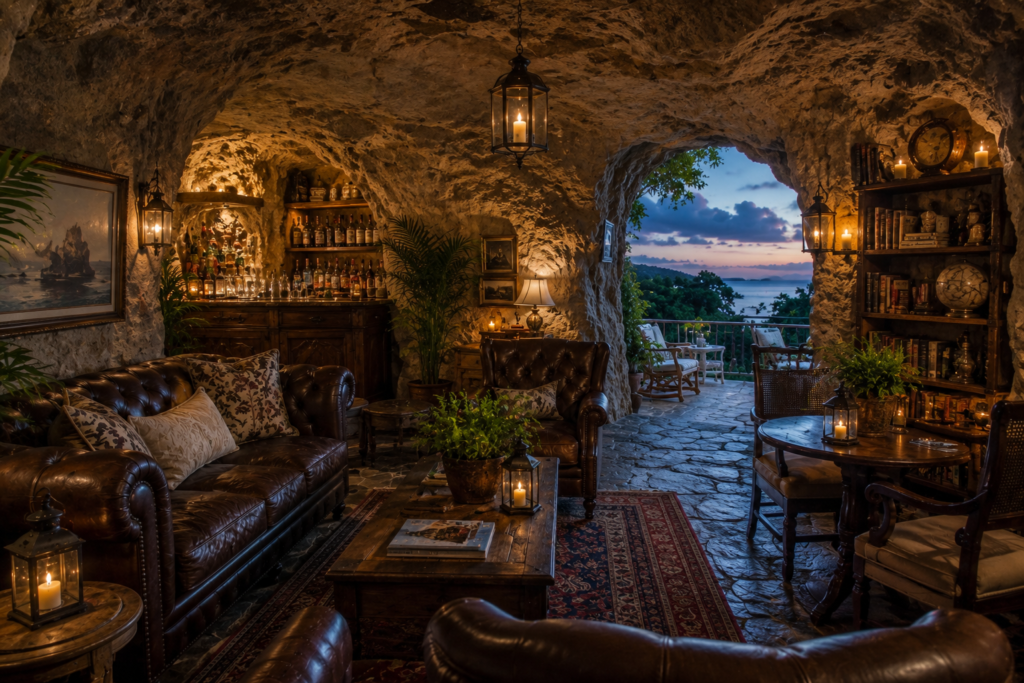
Today, The Cave is one of the resort’s most distinctive gathering places, tucked beneath the main hotel in a space that feels almost hidden from the outside world. With its stone walls, intimate atmosphere, and secluded location, it doesn’t take much imagination to understand why visitors associate it with Prohibition-era intrigue.
According to local stories, the area served as a discreet refuge where guests could enjoy drinks away from prying eyes. Whether every tale is accurate is difficult to verify, but the setting certainly feels like something from another era. Standing inside the dimly lit space, it is easy to picture wealthy guests slipping downstairs after dinner, gathering in small groups, and enjoying an evening that technically wasn’t supposed to exist. The fact that The Cave still operates today only adds to its mystique. Few places connect modern visitors to the resort’s colorful past quite as effectively as this hidden corner beneath the hotel.
The Teacup Deception
One of the most frequently repeated Prohibition stories involves an ingenious attempt to disguise alcohol from unwanted attention. According to legend, drinks were sometimes served in ordinary teacups rather than traditional barware, allowing guests to enjoy their beverages without attracting notice. Whether the practice actually occurred at the Mount Washington Resort remains uncertain, but the story persists because it feels entirely believable. Throughout the Prohibition era, Americans developed countless creative methods for concealing alcohol consumption, particularly in locations frequented by affluent travelers and influential guests.
The image itself is difficult to resist. Imagine a room filled with elegantly dressed men and women sipping from delicate china cups while everyone quietly understood that tea was not the beverage being served. Even if the story has grown with time, it captures the spirit of an era when appearances mattered almost as much as the rules themselves.
The Evidence Trapdoor
Perhaps the most dramatic legend associated with the resort’s Prohibition years involves a hidden trapdoor and a well-rehearsed plan for avoiding federal agents. According to the story, hotel staff maintained a constant watch for approaching law enforcement officers. If trouble appeared on the winding mountain roads leading to the resort, an alarm would supposedly be raised, giving employees time to remove or destroy incriminating evidence before inspectors arrived.
Some versions of the tale claim that bottles could be dropped through a concealed trapdoor and smashed below, eliminating proof of illegal activity before authorities entered the building. Others suggest the story has become more elaborate with each retelling. Whether fact or fiction, the legend survives because it perfectly matches the image many people have of the Prohibition era—a time of hidden rooms, secret signals, and creative attempts to stay one step ahead of the law. Like so many stories connected to the Mount Washington Resort, it occupies that fascinating space between documented history and local lore, where certainty becomes less important than the story itself.
🎨 The Great White-Out Cover-Up
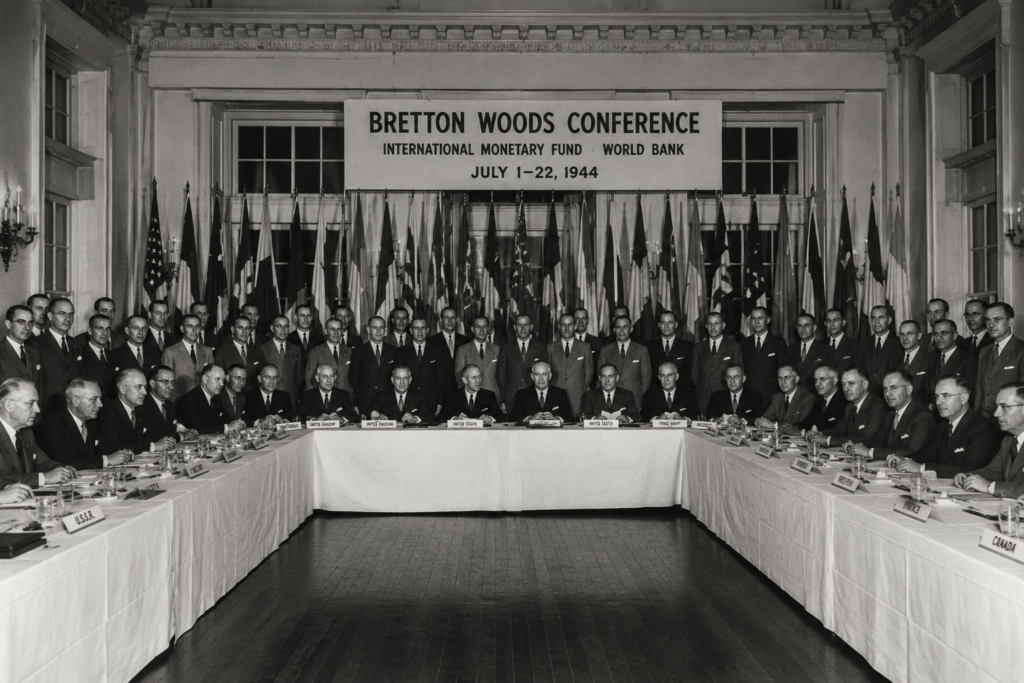
Most visitors associate the Mount Washington Resort with luxury vacations, mountain scenery, and grand architecture. Yet for a brief period during World War II, the hotel found itself at the center of one of the most important economic meetings in modern history. In July 1944, representatives from forty-four nations gathered at the resort for what became known as the Bretton Woods Conference. The agreements reached during those meetings helped shape the postwar global economy and led to the creation of institutions such as the International Monetary Fund and the World Bank. While the conference itself is well documented, the stories surrounding the hotel’s preparation have become part of local lore.
The Panicked Renovation
By the early 1940s, the resort had experienced difficult years. The Great Depression had dramatically reduced travel, and the war had created additional challenges for large luxury properties throughout the country. When the decision was made to host an international conference at Bretton Woods, officials suddenly faced the enormous task of preparing the aging hotel for delegates arriving from around the world. According to stories that have circulated for decades, the preparations took place under intense pressure. Workers reportedly raced against the clock to clean, repair, and refresh spaces that had seen years of heavy use. The goal was simple: make the resort look worthy of hosting world leaders and financial experts.
Whether every detail of these accounts is accurate is difficult to determine today, but the stories persist because they highlight the extraordinary transformation that had to occur in a relatively short period of time. Visitors strolling through the elegant corridors today may find it hard to imagine the frantic activity that supposedly unfolded before the conference opened.
Ruined Masterpieces
Perhaps the most debated story from this period involves what happened during those hurried preparations. According to local accounts, workers were instructed to focus on appearance and efficiency rather than historical preservation. As a result, some decorative features were allegedly painted over or covered up in an effort to make rooms appear cleaner and more uniform. The story claims that beautiful woodwork, decorative trim, and other original architectural details disappeared beneath layers of paint. Whether the situation was quite as dramatic as later retellings suggest remains open to debate, but preservationists have long discussed the challenges of restoring historic properties that underwent decades of renovations and changing design trends.
What makes the story so compelling is that it reflects a common reality faced by many historic landmarks. Decisions that seem practical in one era can later be viewed as unfortunate losses. The very features that modern visitors admire were not always appreciated in the same way by previous generations. Today, as guests admire the craftsmanship and architectural details throughout the resort, it is worth remembering that preserving history is often a process of rediscovery. Behind every restored feature may be a story of something that was hidden, forgotten, or nearly lost altogether.
🤫 The Stories That Refuse to Go Away
Every historic property accumulates stories over time. Some begin with a documented fact and gradually grow more elaborate with each retelling. Others emerge from local gossip, staff recollections, or visitors comparing notes decades after an event occurred. The Mount Washington Resort is no exception.
What makes these stories particularly fascinating is that they often cannot be fully proven or disproven. They exist in that gray area where history, memory, and folklore overlap. Whether true, partially true, or simply the product of a good storyteller, they continue to be shared long after the people involved have disappeared from the scene.
The “Fake” Portraits
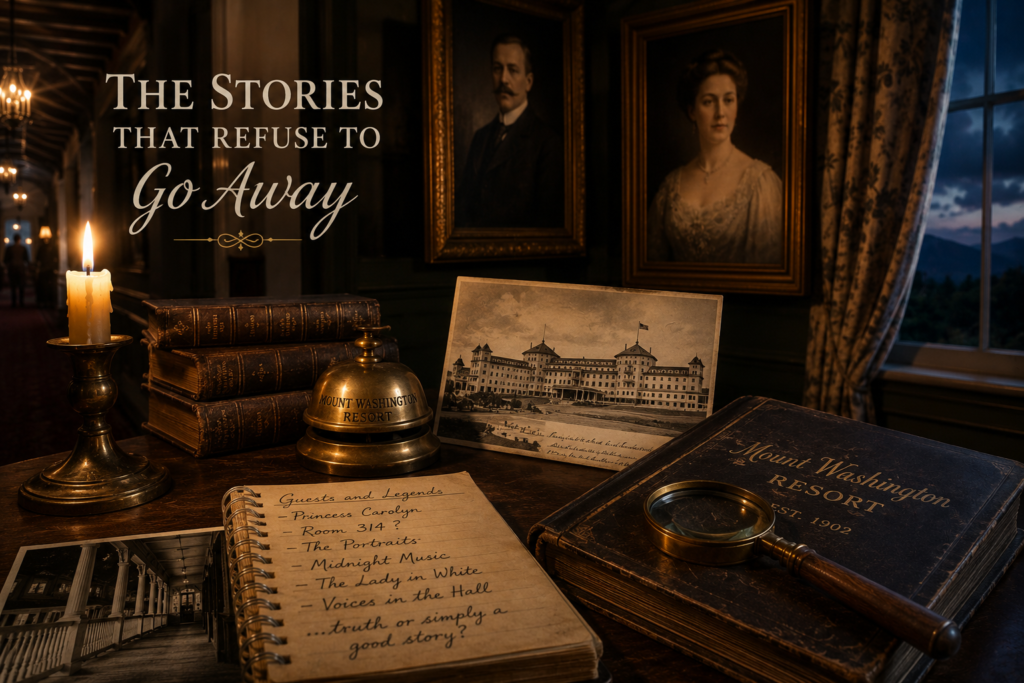
Many visitors admire the portraits displayed throughout the resort without giving them much thought. They seem to belong naturally within the grand setting, helping tell the story of the people who shaped the hotel’s history. Yet one persistent rumor suggests that some of the portraits associated with Joseph and Carolyn Stickney may not be the original paintings at all.
According to the story, the portraits currently displayed were created years later to replace or replicate earlier works. Like many stories associated with historic properties, the details vary depending on who is telling it. Some versions claim the originals were lost, while others suggest they were moved, damaged, or placed into private collections.
Whether the rumor contains any truth is less important than what it reveals about visitors’ fascination with authenticity. People are naturally drawn to the idea of standing in the presence of original artifacts and objects that witnessed history firsthand. When questions arise about what is original and what is not, curiosity often follows.
The story also serves as a reminder that historic preservation is rarely straightforward. Over decades and even centuries, buildings evolve, furnishings are replaced, and collections change. Sometimes the stories attached to those changes become just as interesting as the objects themselves.
The Room Number Confusion
Ask ten people about Princess Carolyn’s famous room and you may receive several different answers. While Room 314 is widely associated with her legend today, local accounts occasionally point to other rooms within the hotel as her actual quarters.
Some longtime visitors and amateur historians have suggested that the room designation may have changed over the years as renovations altered the building. Others believe the confusion simply developed through decades of storytelling, with different guides and guests remembering different details. The uncertainty has only added to the mystery. If Princess Carolyn’s spirit truly lingers in the hotel, some jokingly wonder whether visitors have been looking in the wrong place all along. It is the kind of question that can never be answered with complete certainty, which may explain why the story continues to survive.
In many ways, the room-number debate perfectly captures what makes these stories endure. People enjoy mysteries that leave a little room for imagination. Not every question needs a definitive answer. Sometimes the mystery itself becomes part of the attraction. More than a century after the resort first opened its doors, visitors are still discussing Princess Carolyn, still debating old rumors, and still sharing stories with one another. That may be the greatest secret of all. Long after the original events have faded into history, the stories continue to live on.
🚶➡️ As You Travel On
Every historic property has two histories.
There is the documented history found in books, archives, photographs, and museum exhibits. Those stories tell us who built a place, what happened there, and why it mattered. The Mount Washington Resort certainly has no shortage of remarkable history, from its Gilded Age beginnings to its role in hosting the historic Bretton Woods Conference. But there is another history as well.
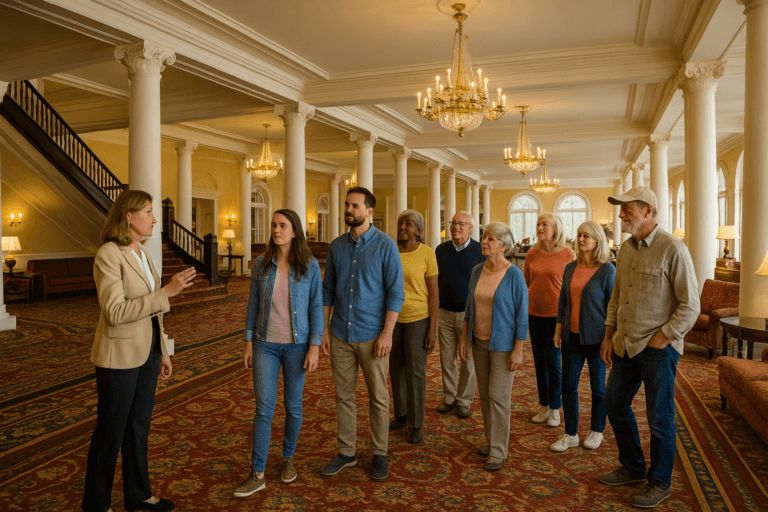
It lives in the stories passed from one visitor to another, shared by tour guides, longtime staff members, local residents, and curious travelers. Some of those stories are supported by historical records. Others have become legends that have grown with each retelling. A few may never be fully explained. Whether Princess Carolyn really changed gowns to outshine arriving guests, whether secret Prohibition gatherings flourished beneath the hotel, or whether a familiar floral perfume still drifts through the halls from time to time is something each visitor must decide for themselves. The next time you walk through the grand lobby, pause on the veranda, explore The Cave, or wander the hallways near Room 314, take a moment to look beyond the official tour. Historic places often reveal their character in unexpected ways, and sometimes the most memorable part of a visit isn’t what appears on an exhibit panel—it’s the story someone quietly shares afterward.
And if you’ve visited the Mount Washington Resort, what stories did you hear? Every historic property seems to have a few tales that never quite make it into the guidebooks, yet somehow become part of the experience all the same. Those are often the stories we remember longest.
🔗 Continue Exploring
Mount Washington Resort: A Grand Hotel in the White Mountains
Learn how a Gilded Age resort became a landmark of American history.
Mount Washington Resort Visit & Tour Guide
Plan your visit with touring tips, dining options, and nearby attractions.
Exploring Bretton Woods and the White Mountains (Coming Soon)
Discover more historic sites, scenic drives, and destinations throughout the region.