House Of The Seven Gables Salem
A place where architecture, literature, and lived history quietly converge
Setting the Scene
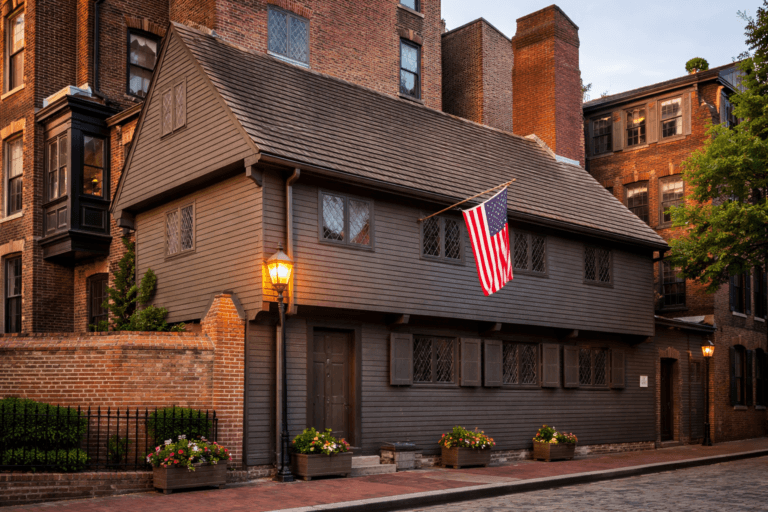
Along the Salem waterfront stands a house that feels both familiar and elusive—its weathered façade shaped by centuries of change, interpretation, and survival. The House of the Seven Gables is often introduced through its literary fame, yet the physical structure tells a much longer and more complex story.
Built generations before it inspired a novel, the house reflects early New England ambition, maritime wealth, and evolving domestic life. It has been reimagined, restored, and reinterpreted—yet it remains deeply grounded in place.
For heritage travelers, this is not just a famous house. It is a layered site where history, imagination, and preservation intersect.
📜 A Brief History of the Property
The House of the Seven Gables was constructed in 1668 for merchant John Turner I, whose success in maritime trade shaped both the house’s scale and its early prominence. Over successive generations, the property expanded and contracted, mirroring shifts in fortune, fashion, and function.
By the 19th century, the house had passed into the hands of the Ingersoll family, where it became closely associated with Nathaniel Hawthorne, who drew inspiration from the structure for his 1851 novel The House of the Seven Gables.
In the early 20th century, preservationist Caroline Emmerton undertook a significant restoration—returning architectural features, reinterpreting interior spaces, and transforming the property into a museum with a broader social mission. Her work ensured the house would survive not as a relic, but as a living historic site.
🏠 Architecture & Design Highlights
Architecturally, the House of the Seven Gables is a study in evolution rather than symmetry. Built in the post-medieval English style, it features:
- Steeply pitched roofs
- Massive timber framing
- Prominent gables that give the house its name
Over time, additions were made and later removed, windows were altered, and interior layouts shifted to reflect changing needs. The result is a structure that reveals its history through irregular spaces, layered materials, and subtle contrasts.
Rather than presenting a single moment frozen in time, the house offers visitors a rare opportunity to see how a colonial home adapted across centuries.
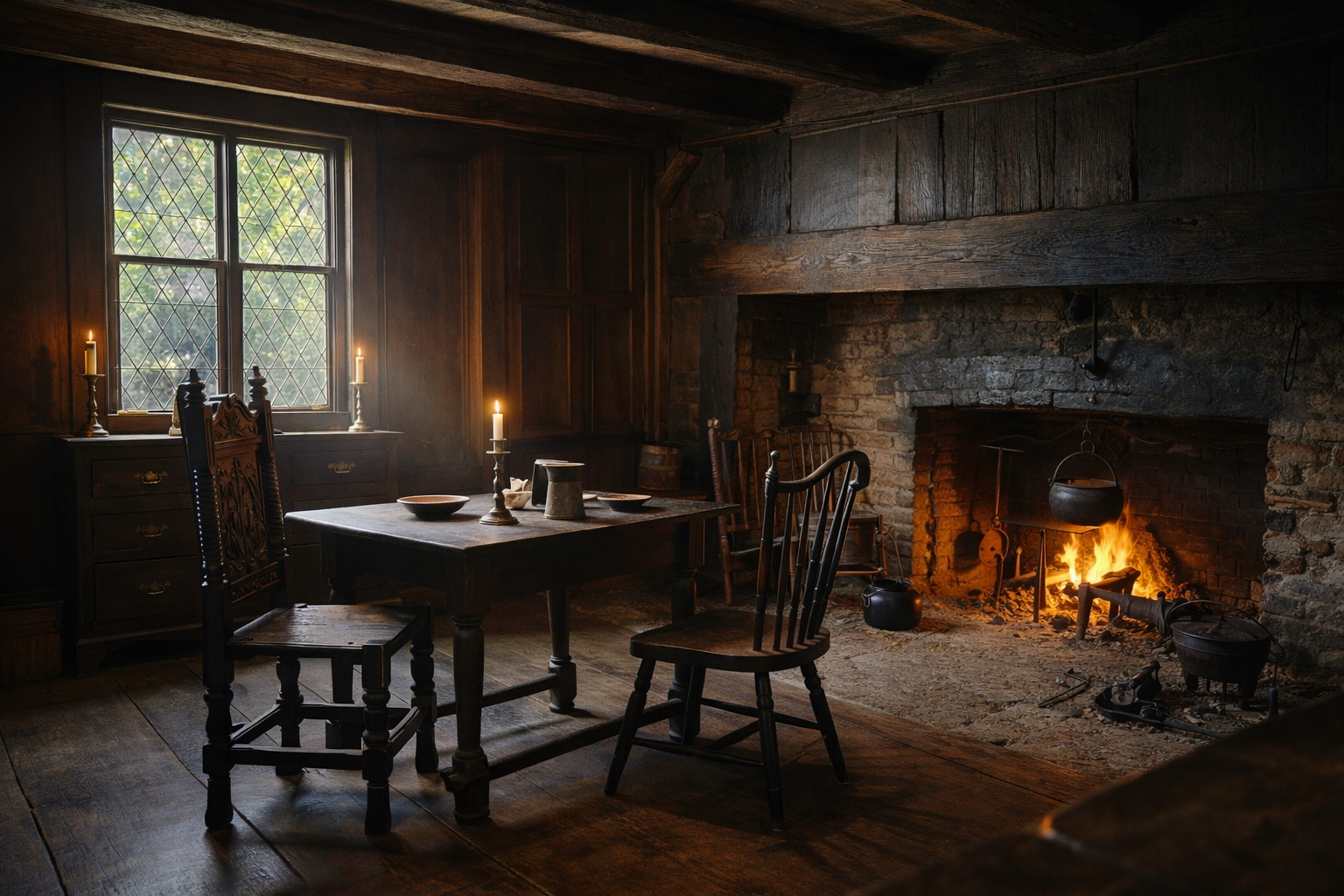
Natural light softens the dark timber interior of the House of the Seven Gables, revealing a space shaped by function, craftsmanship, and everyday colonial life.
👤 The People Behind the Property
While the Turners and Hawthorne often anchor the narrative, the house’s survival owes much to those who lived and worked there quietly—family members, caretakers, tenants, and later, preservation advocates.
Caroline Emmerton’s role is especially significant. Her restoration work was paired with a broader effort to support Salem’s immigrant communities through education and social programs, making the site both a historic house and a center for civic purpose.
These human layers—famous and forgotten—shape the house as much as its beams and walls.
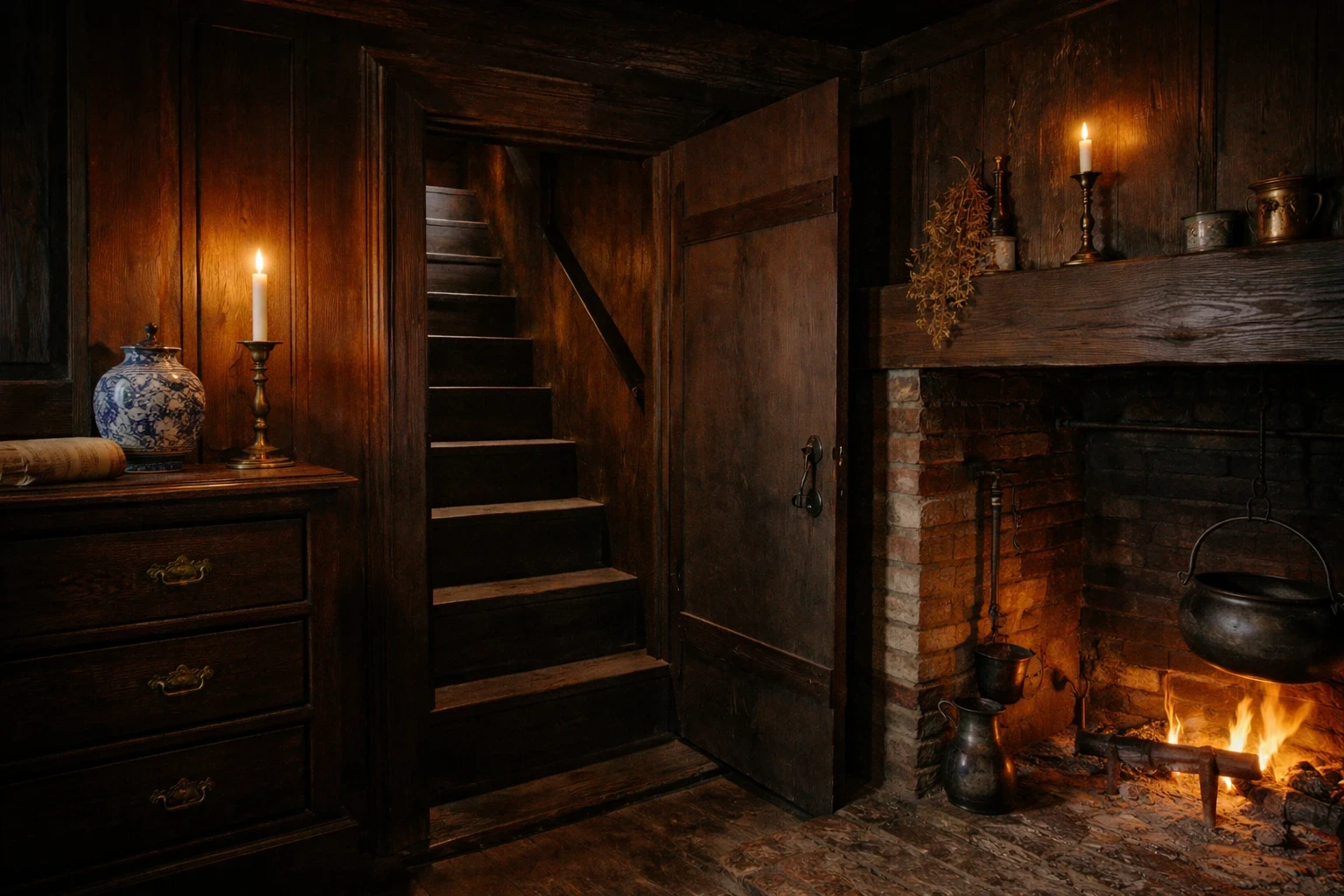 Hidden staircases and tucked-away spaces reveal how the House of the Seven Gables functioned as a lived-in home, shaped by privacy, movement, and necessity.
🌿 Daily Life at the Property
At its core, the House of the Seven Gables was a working household. Daily life revolved around:
- Maritime trade connections
- Domestic labor
- Seasonal rhythms tied to the waterfront
Rooms served multiple purposes, and the household adapted as family fortunes rose and fell. The spaces visitors move through today were once shaped by practicality rather than display—a reminder that historic homes were lived in, not designed as museums.
🔄 The Property Today
Today, the House of the Seven Gables operates as a preserved historic site and museum, offering guided tours that explore both architectural features and literary connections. Surrounding gardens, outbuildings, and relocated historic structures—including Nathaniel Hawthorne’s birthplace—add depth to the visitor experience.
The site continues to balance interpretation with preservation, inviting visitors to consider not only what the house was, but why it still matters.
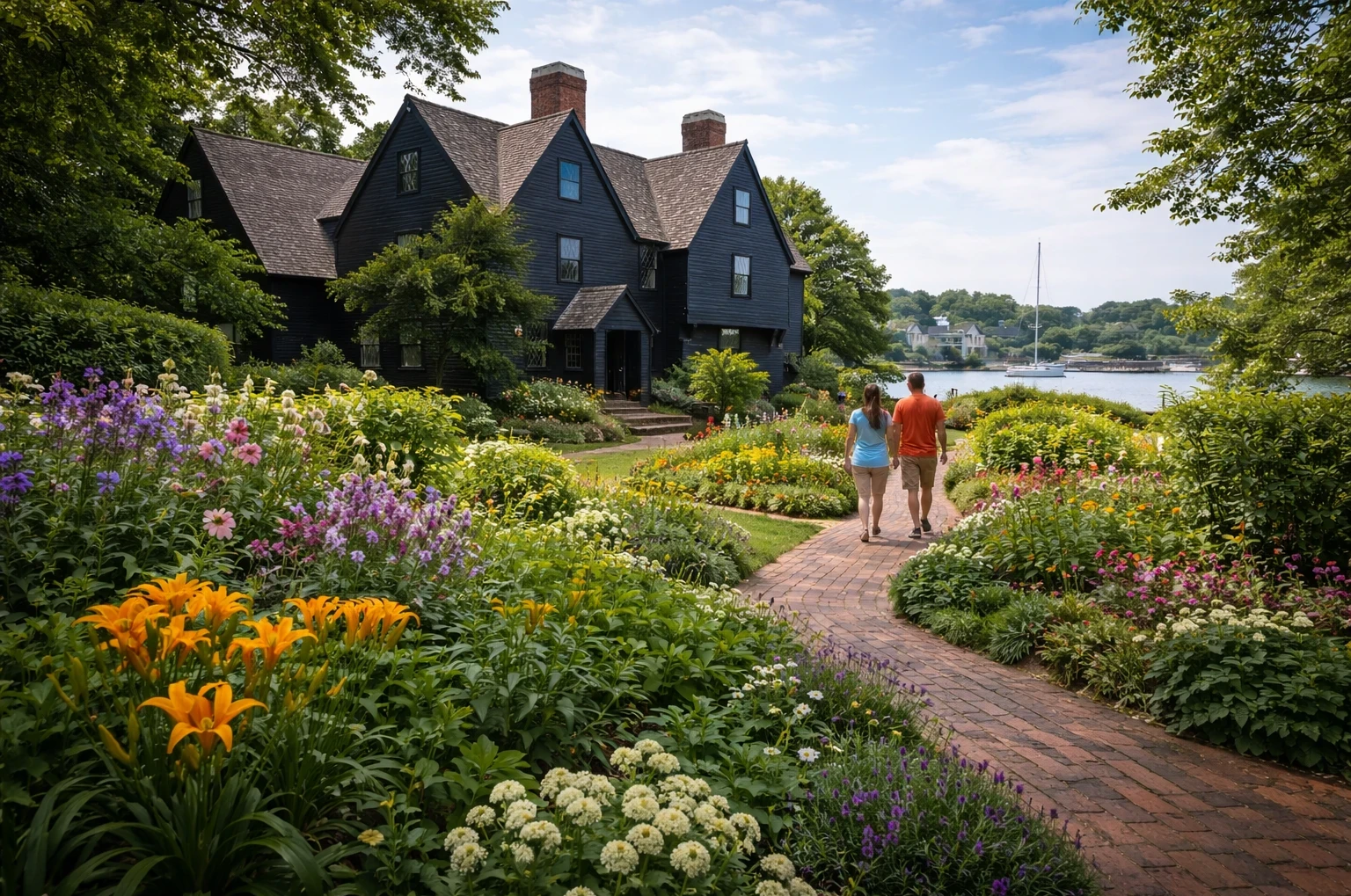 Today, gardens and waterfront paths soften the House of the Seven Gables, linking its long history to Salem’s coastal setting and contemporary visitor experience.
🗺️ Visiting Context
A visit to the House of the Seven Gables often pairs naturally with Salem’s broader historic landscape, including waterfront districts, early cemeteries, and other preserved homes.
Rather than standing alone, the property serves as an anchor point for exploring Salem beyond its most famous chapters—offering a deeper look at maritime history, literature, and community life.
📌 Why This Place Still Matters
The House of the Seven Gables endures because it represents more than a single story. It reflects how history is shaped, remembered, and sometimes reimagined—through architecture, literature, and preservation choices.
For heritage travelers, it offers a reminder that places are not static. They evolve, accumulate meaning, and continue to speak—often most clearly when approached with curiosity rather than expectation.
🧭 Looking Back (and Forward)
Some historic houses impress through grandeur. Others linger through complexity.
The House of the Seven Gables stays with visitors because it resists simplification. It invites reflection—not just on the past it represents, but on how stories are told, retold, and preserved for future generations.
Some houses preserve walls and rooms. Others preserve lives, choices, and moments in time.