Historic Sites to Visit in Boston
Editorial Note
Wander Through Time typically focuses on historic homes and estates, exploring the stories found within individual properties. Boston, however, is unique. Its historic homes exist within one of the most concentrated and walkable collections of historic sites in the country.
Historical sites to visit in Boston are layered into its streets, buildings, and shared spaces. Rather than existing in isolation, historic homes, meeting houses, burial grounds, and civic landmarks form a compact network that reflects how people lived, gathered, debated, and moved through the city over centuries.
This guide highlights the most visited and historically significant sites in Boston, offering context and continuity for travelers who want to explore beyond a single stop. Many of these locations are connected by the Freedom Trail, making Boston one of the most walkable and immersive historic cities in the United States.
🏛️ The Freedom Trail: Boston’s Historic Spine
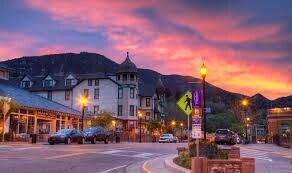
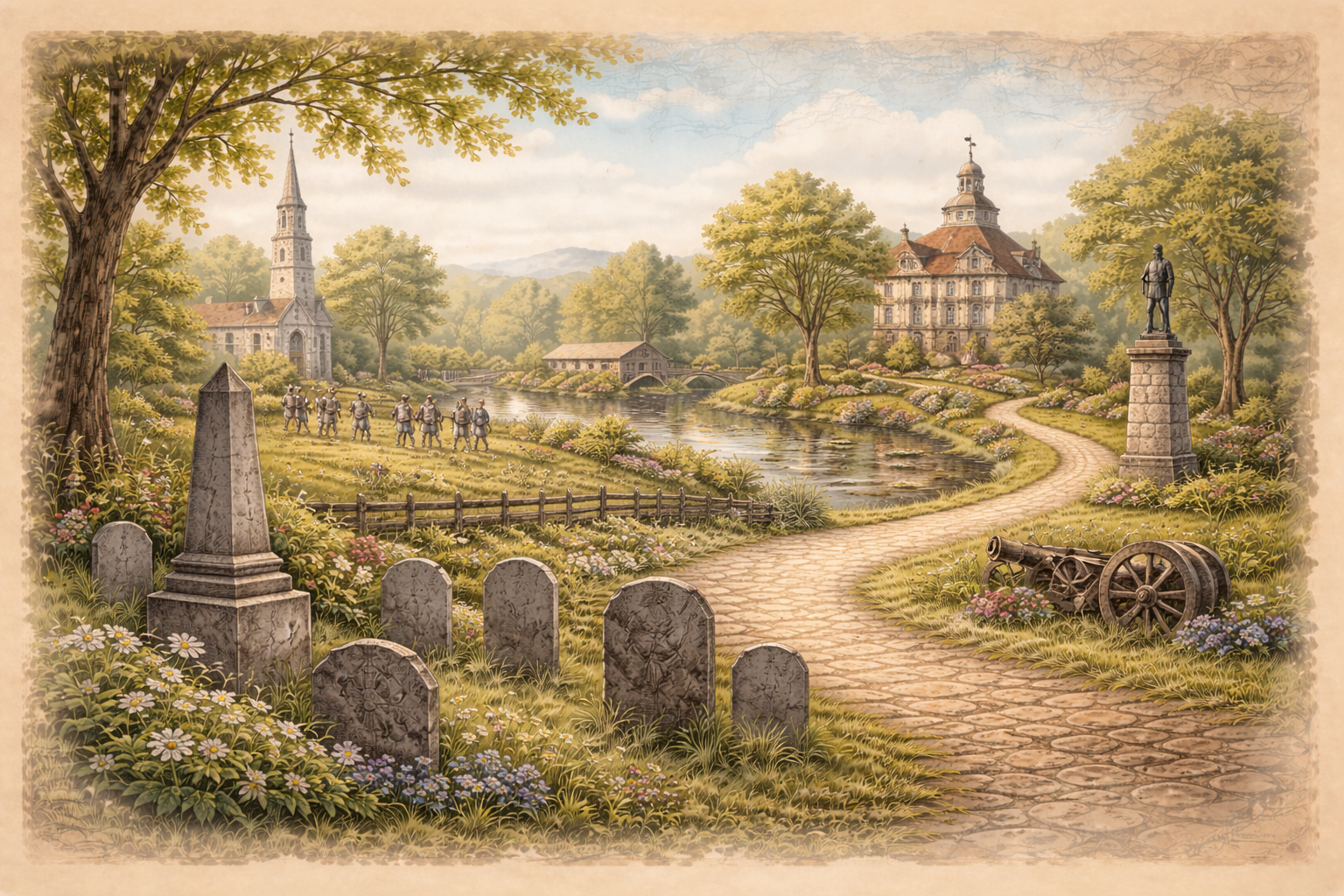
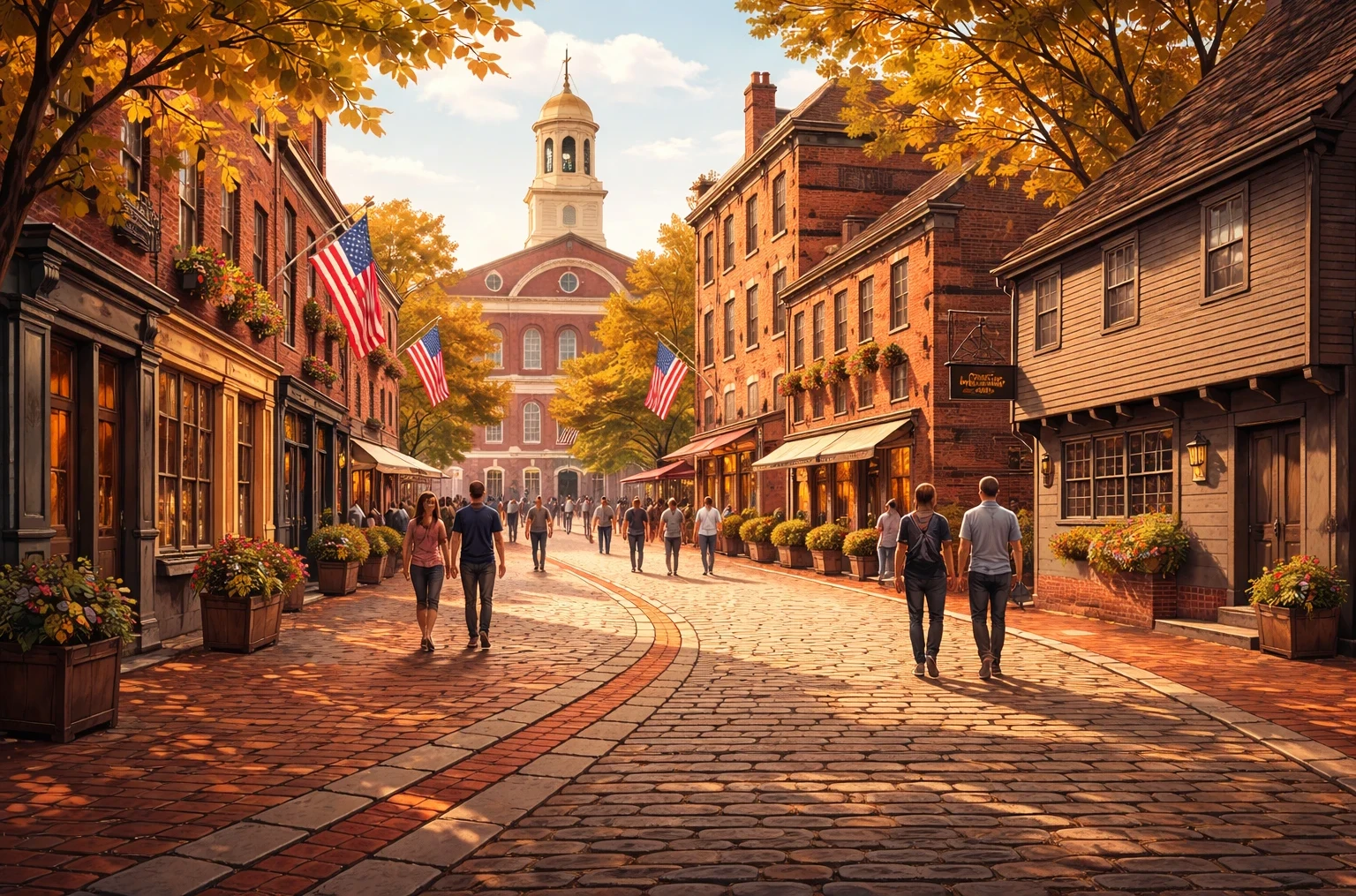 A stylized view of Boston’s historic core, highlighting the walkable streets and compact neighborhoods that connect many of the city’s most significant historic sites.
The Freedom Trail is a 2.5-mile walking route that connects sixteen nationally significant historic sites. Marked by a red line through sidewalks and streets, it links homes, churches, burial grounds, and civic buildings tied to the American Revolution and early civic life.
🔗 Official site: https://www.thefreedomtrail.org
Many of Boston’s most visited historic places sit directly on this route or just steps from it.
🌿 Boston Common
The Boston Common is America’s oldest public park and the traditional starting point of the Freedom Trail. Established in 1634, it served as grazing land, a gathering place, and later a site for military drills and public expression.
🔗 https://www.thefreedomtrail.org/trail-sites/boston-common
🇺🇸 Civic & Revolutionary Boston
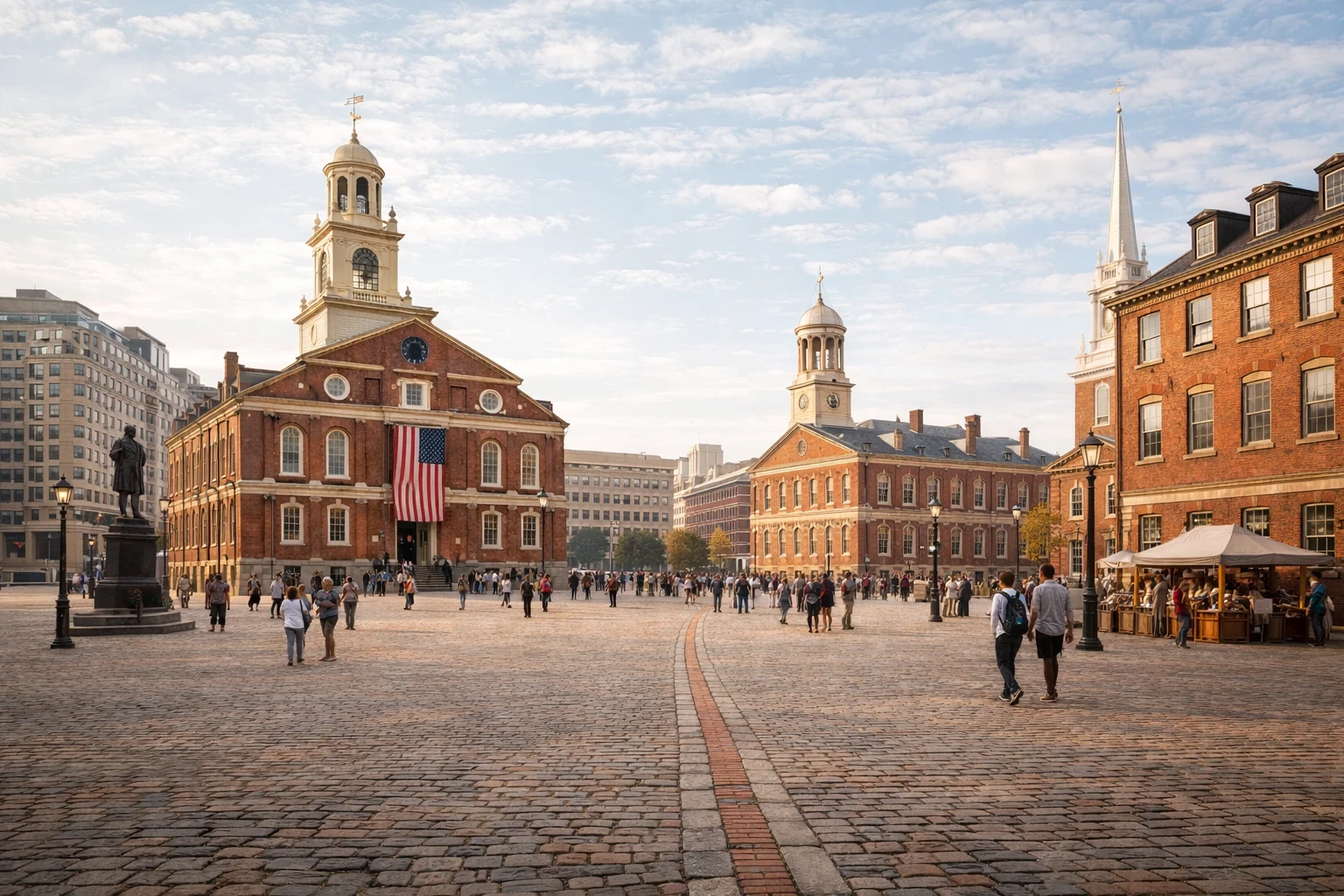 An open civic square in historic Boston, where public buildings and shared spaces shaped debate, commerce, and everyday life in the colonial and early American city.
Often called the “Cradle of Liberty,” Faneuil Hall functioned as both a marketplace and a meeting hall where colonists gathered to debate issues that shaped the path to independence.
🔗 https://www.thefreedomtrail.org/trail-sites/faneuil-hall
Old State House
Built in 1713, the Old State House is the oldest surviving public building in Boston and the seat of colonial government. The Declaration of Independence was first read publicly in Massachusetts from its balcony.
🔗 https://www.thefreedomtrail.org/trail-sites/old-state-house
Old South Meeting House
This 1729 meeting house hosted mass gatherings protesting British rule, including the meeting that led directly to the Boston Tea Party.
🔗 https://revolutionaryspaces.org/old-south-meeting-house/
Boston Massacre Site
Marked by a simple stone ring in the street outside the Old State House, this site commemorates the 1770 confrontation that intensified colonial resistance.
🔗 https://www.thefreedomtrail.org/trail-sites/boston-massacre-site
🕍 Historic Churches
Old North Church
Built in 1723, Old North Church is Boston’s oldest standing church building and is closely associated with Paul Revere’s midnight ride and the lantern signal warning of British troop movement.
🔗 https://www.oldnorth.com
🏡 Historic Homes & Domestic Life
Paul Revere House
Constructed around 1680, the Paul Revere House is the oldest surviving residential structure in downtown Boston. It offers a rare look at everyday colonial domestic life in the North End.
🔗 https://www.paulreverehouse.org
🪦 Burial Grounds & Memory Landscapes
Granary Burying Ground
Established in 1660, this burial ground is the final resting place of notable figures including Paul Revere, Samuel Adams, and John Hancock.
🔗 https://www.thefreedomtrail.org/trail-sites/granary-burying-ground
Copp’s Hill Burying Ground
Located in the North End, Copp’s Hill offers insight into early Boston’s merchant and artisan communities and overlooks the historic harbor.
🔗 https://www.thefreedomtrail.org/trail-sites/copps-hill-burying-ground
King’s Chapel Burying Ground
Founded in 1630, this is Boston’s oldest burial ground and reflects the city’s earliest English settlement.
🔗 https://www.kings-chapel.org/burying-ground
⚓ Extended Freedom Trail Sites
Known as “Old Ironsides,” the USS Constitution is the world’s oldest commissioned warship afloat and part of Boston National Historical Park.
🔗 https://www.nps.gov/bost
Bunker Hill Monument
This granite obelisk marks the site of the first major battle of the American Revolution and stands as a powerful endpoint to the Freedom Trail.
🔗 https://www.nps.gov/bost
🚶 A Thoughtful One-Day Historic Walk
For visitors with limited time, Boston’s historic core can be experienced meaningfully in a single day on foot.
Morning:
Begin at Boston Common, continue to Granary Burying Ground, then visit the Old State House and Boston Massacre Site.
Midday:
Move toward Faneuil Hall, where commerce and civic life intersected, then walk into the North End.
Afternoon:
Explore the Paul Revere House, Old North Church, and Copp’s Hill Burying Ground, where domestic life, faith, and community come into focus.
Optional Extension:
Continue to Charlestown to visit the USS Constitution and Bunker Hill Monument.
Many visitors enhance this walk using the National Park Service Freedom Trail audio tour, available through the NPS app.
🔗 https://www.nps.gov/bost/learn/freedom-trail-audio-tour.htm
🏨 Where to Stay Nearby: Lodging with Historic Character
For travelers who value walkability, character, and a sense of place, several lodging options near Boston’s historic core offer a comfortable base for exploration:
- Omni Parker House – A long-established Boston hotel with deep historical associations
- XV Beacon – A boutique Beacon Hill property with architectural character
- Harborside Inn – A modest, well-located option near the waterfront
- Clarendon Square Bed and Breakfast – A smaller, residential-scale experience
You may choose to contact these properties directly for details. If you prefer to compare historic-style lodging options across Boston neighborhoods in one place, additional accommodations can also be explored through Booking.com.
Looking Beyond a Single Site
Boston’s history is best understood in layers — through homes, civic spaces, sacred places, and public grounds that exist in close proximity. This guide provides context across the city, while individual property articles explore specific sites in greater depth.
Taken together, these places reveal not just events, but the rhythms of daily life that shaped early Boston.