Mount Rushmore National Memorial: The Story Behind America’s Most Recognizable Landmark
🌄 Setting the Scene
As the United States prepared to celebrate its 250th birthday, I’ve found myself paying closer attention to the historic places that helped shape our nation. Mount Rushmore is one of those landmarks I’ve recognized for most of my life. Yet it suddenly occurred to me that while I knew the faces, I didn’t really know the story. Why were these four presidents chosen? How did anyone carve something so enormous into solid granite? Those questions sent me on a journey of discovery—and what I found made me appreciate this iconic monument in an entirely new way.
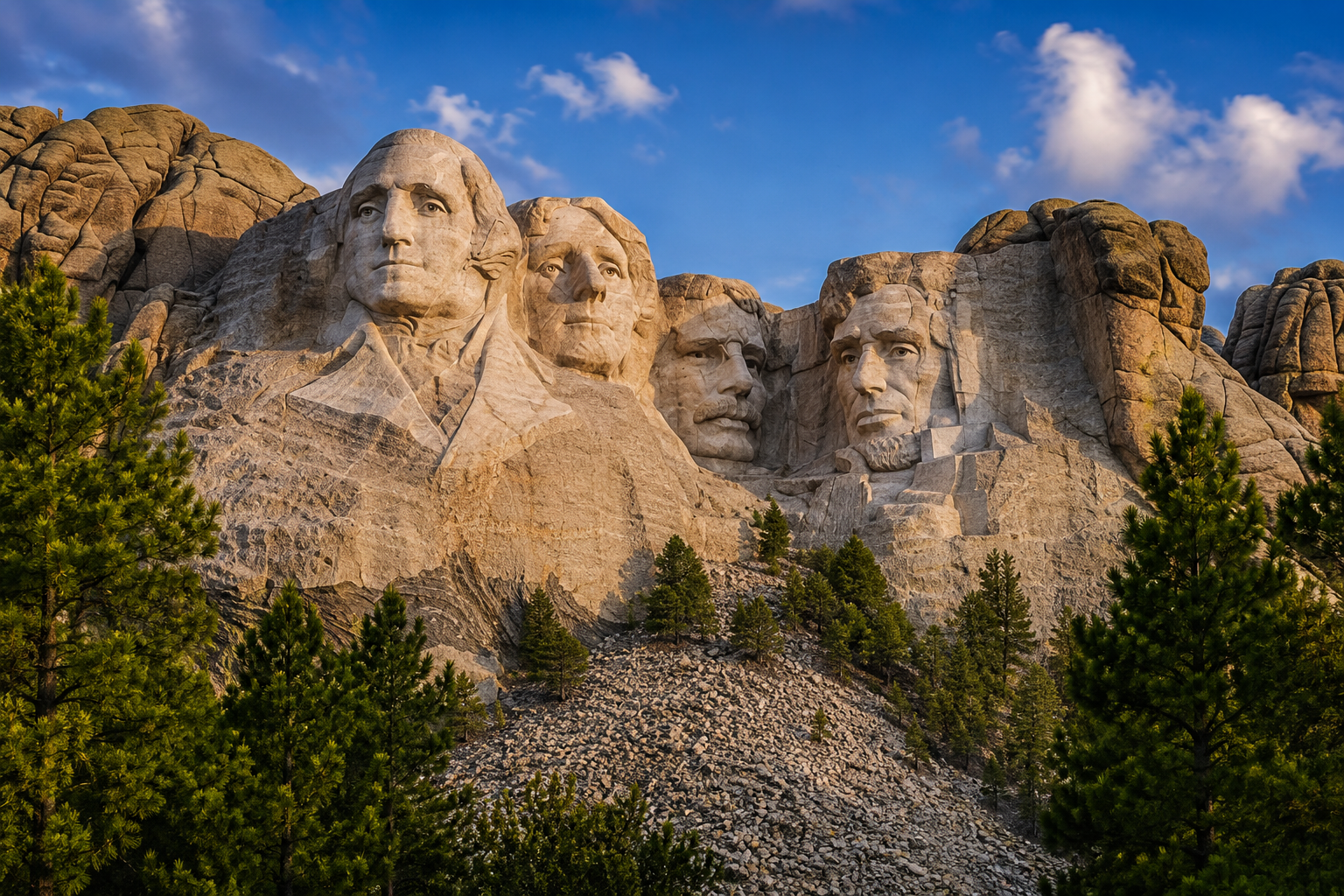
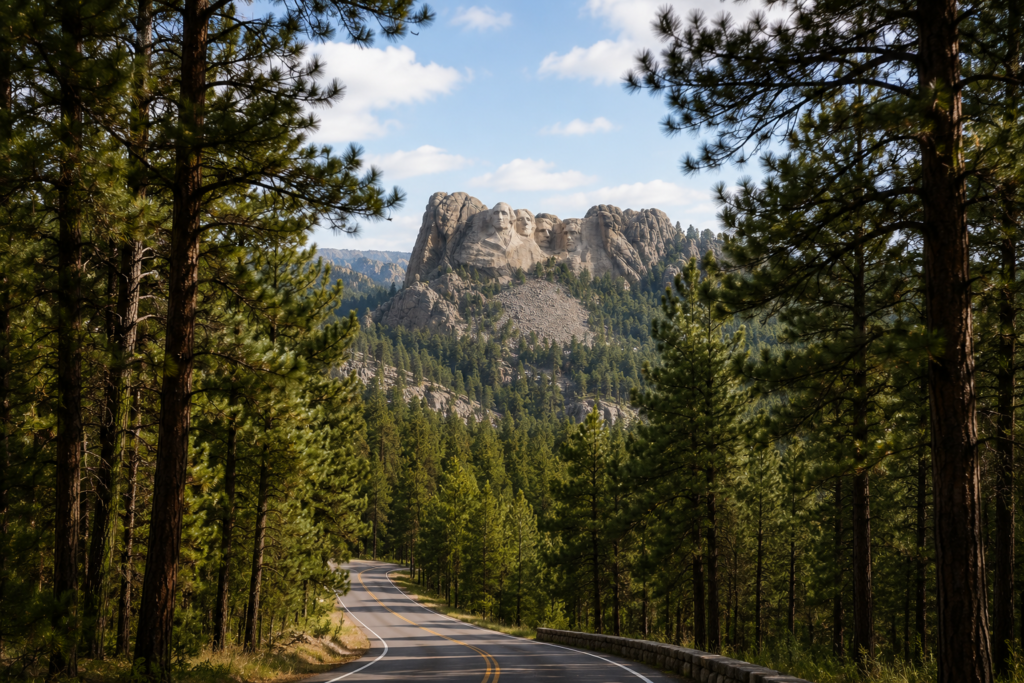
Few landmarks are as instantly recognizable as Mount Rushmore National Memorial. Long before visitors catch their first close-up glimpse of the four presidential faces, they have already seen the monument in photographs, history books, movies, and television programs. Yet nothing quite prepares you for the moment when the granite mountain appears among the towering pines of South Dakota’s Black Hills.
Standing beneath the monument, its enormous scale becomes impossible to ignore. Each face rises nearly six stories high, carved directly into solid granite with extraordinary precision. What seems almost impossible from a distance becomes even more remarkable when you realize that this engineering masterpiece was created nearly a century ago using little more than vision, determination, dynamite, and skilled craftsmanship.
But Mount Rushmore is far more than an impressive work of art. Behind the familiar faces lies a story of ambitious dreams, remarkable engineering, national pride, and enduring conversations about the people and events that shaped America. Understanding that story transforms a visit from simply admiring a famous landmark into appreciating one of the nation’s most remarkable achievements.
Whether you are planning your first visit or simply curious about the monument you’ve seen countless times, Mount Rushmore offers far more than four faces carved into a mountainside. It invites visitors to look beyond the landmark and discover the vision, the people, and the stories that continue to make it one of America’s most enduring symbols.
📜 The Vision Behind Mount Rushmore
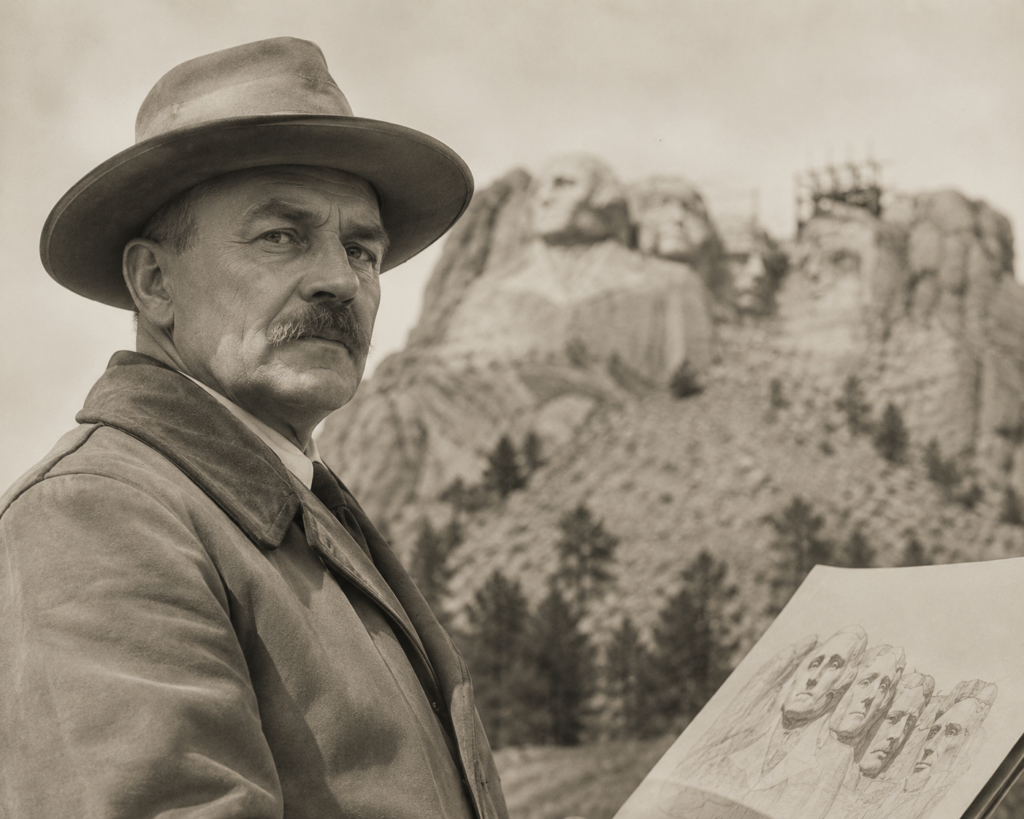
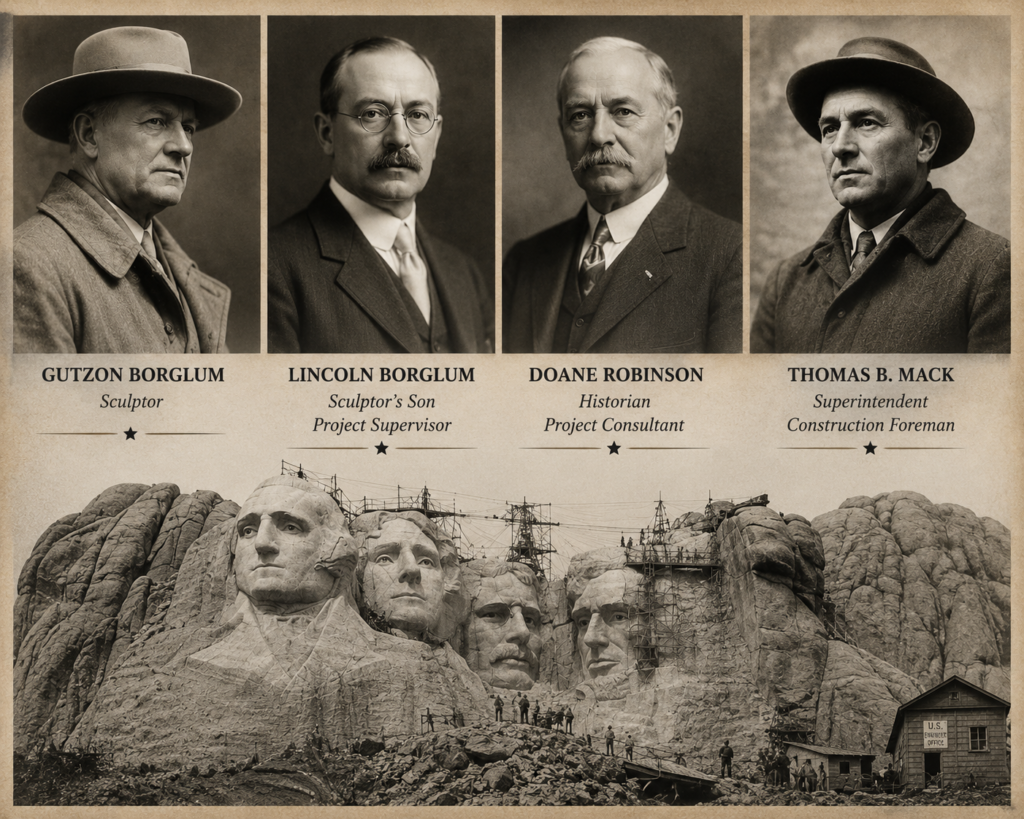
Every great landmark begins with an idea, and the story of Mount Rushmore National Memorial started with an ambitious vision to introduce more people to the beauty of South Dakota’s Black Hills. In 1923, South Dakota State Historian Doane Robinson began searching for a way to encourage tourism to a region that was rich in natural beauty but largely unknown to travelers from the eastern United States. His original proposal called for carving famous figures of the American West into the granite cliffs, creating a monument unlike anything the country had ever seen.
To bring that vision to life, Robinson enlisted renowned sculptor Gutzon Borglum, whose imagination quickly expanded the project into something far more ambitious. Rather than celebrating regional heroes, Borglum believed the monument should tell the story of the United States itself. He selected four presidents whose leadership represented pivotal chapters in the nation’s first 150 years—George Washington for the nation’s founding, Thomas Jefferson for its expansion, Abraham Lincoln for preserving the Union, and Theodore Roosevelt for guiding America into the modern age.
Construction began in 1927, transforming a rugged granite mountainside into an extraordinary work of art. Over the next fourteen years, hundreds of workers, engineers, and craftsmen turned Borglum’s vision into reality. Although the original design called for the presidents to be carved from the waist up, funding shortages and the approach of World War II brought the project to an early conclusion. Even unfinished, the monument became one of the most recognizable symbols of the United States.
🪨 A Mountain Becomes a Monument
Standing beneath Mount Rushmore National Memorial, it is difficult to imagine how anyone could transform a solid granite mountain into four recognizable faces. Yet that was exactly the challenge facing Gutzon Borglum and his team when work began in 1927. Every measurement had to be carefully planned because, once granite was removed, it could never be replaced.
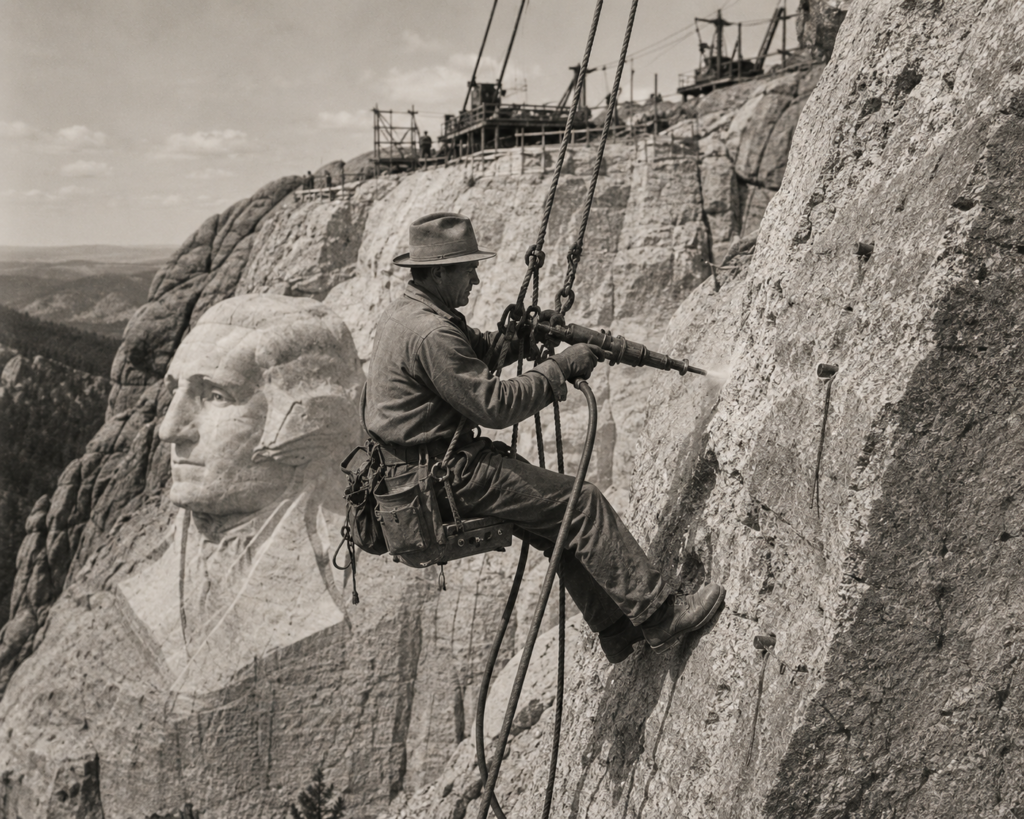
The monument’s sheer scale is astonishing. Each presidential face stands approximately 60 feet tall—about the height of a six-story building. Rather than relying on hand tools alone, workers used carefully placed charges of dynamite to remove nearly 90 percent of the unwanted granite. Only after the mountain had been shaped did craftsmen use pneumatic drills, hammers, and chisels to carve the finer details that give each face its distinctive expression.
Creating faces that looked realistic from hundreds of feet away required far more than artistic talent. Borglum developed an innovative system of scale models and precise measurements, allowing workers suspended from ropes high above the ground to transfer every feature accurately from a small plaster model to the mountainside. It was painstaking work where even a small mistake could have altered the appearance of a president forever.
Although the project took fourteen years to complete, the monument was never finished exactly as Borglum envisioned it. His original plans called for each president to be carved from the waist up, creating an even more dramatic monument. Funding shortages, Borglum’s death in 1941, and the nation’s growing focus on World War II brought construction to an end before that vision could be realized.
Today, visitors often marvel at the monument’s size, but its true achievement lies in the remarkable combination of art, engineering, and determination that made the seemingly impossible a reality. Nearly a century later, Mount Rushmore remains one of the world’s most extraordinary examples of human ingenuity carved directly into the landscape.
👤 The People Who Made It Possible
While Gutzon Borglum’s name is most closely associated with Mount Rushmore, the monument was the result of thousands of individual contributions. It began with Doane Robinson’s vision to attract visitors to South Dakota, expanded through Borglum’s artistic ambition, and ultimately became reality because of the dedication of hundreds of workers willing to tackle a project unlike anything ever attempted before.
Borglum was more than a sculptor. He was an artist, engineer, organizer, and perfectionist who refused to think small. Every detail of the monument reflected his determination to create something that would inspire generations of Americans. When Borglum died in 1941, his son, Lincoln Borglum, assumed leadership of the project and oversaw its final months of construction before work officially came to an end later that year.
Yet perhaps the greatest credit belongs to the more than 400 miners, drillers, carvers, and laborers who worked high above the ground on suspended platforms and ropes. They endured scorching summer heat, freezing winter temperatures, high winds, dust, and the constant challenge of working on nearly vertical granite cliffs. Every day demanded precision, teamwork, and an extraordinary level of trust in one another.
Considering the conditions, one fact remains almost unbelievable: during fourteen years of construction, not a single worker lost his life. There were injuries, of course, but through careful planning, skilled workmanship, and a deep respect for the dangers they faced, the project avoided what many believed would be inevitable. It remains one of the most remarkable safety records of any major engineering project of its era.
Today, visitors naturally admire the four familiar faces carved into the mountain. But behind every carefully sculpted feature stands the story of visionaries who imagined the impossible, artists who designed it, and workers whose skill and determination transformed an ordinary mountainside into one of America’s most enduring landma
🌄 More Than Four Presidents
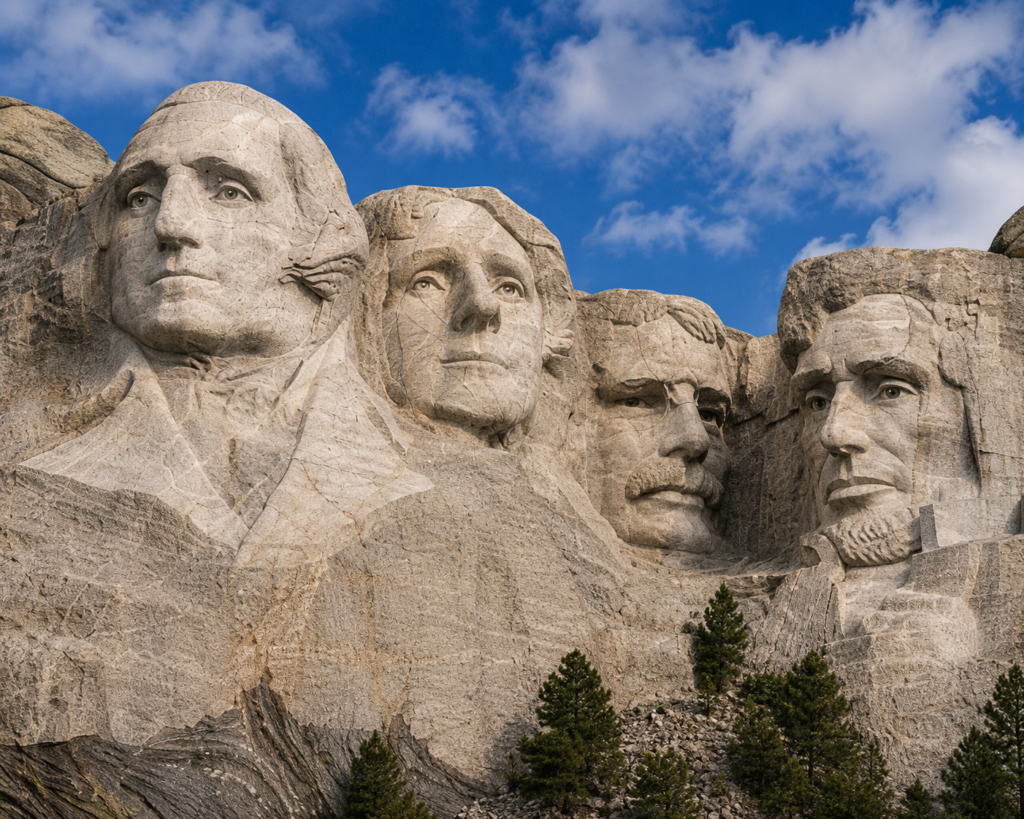
At first glance, Mount Rushmore appears to honor four of America’s best-known presidents. But Gutzon Borglum had a much larger purpose in mind. Rather than simply recognizing four remarkable leaders, he selected presidents who represented four defining chapters in the nation’s first 150 years. Together, they tell the story of America’s birth, growth, preservation, and emergence as a world power.
George Washington was chosen to represent the birth of the United States. As the nation’s first president, his leadership helped guide the young country through its earliest and most uncertain years, establishing a foundation for the democracy that would follow.
Thomas Jefferson symbolizes America’s expansion and opportunity. His presidency is forever linked to the Louisiana Purchase, which doubled the size of the United States and opened vast new lands for exploration and settlement. His vision reflected a nation looking westward toward new possibilities.
Abraham Lincoln represents the preservation of the Union. During the Civil War, his leadership held the country together through its greatest internal crisis while advancing the ideals of freedom and equality that continue to shape the nation today.
Theodore Roosevelt was selected to represent America’s development in the modern era. His leadership strengthened the nation’s role on the world stage while promoting conservation, economic reform, and the responsible stewardship of the country’s natural resources.
Viewed individually, each president represents an important chapter of American history. Together, they tell a much larger story. Mount Rushmore was designed to remind visitors that the United States was shaped over generations by leaders whose decisions influenced the nation’s direction, character, and future. Understanding why these four presidents were chosen allows visitors to see the monument not simply as four familiar faces carved in stone, but as a symbolic timeline of America’s first century and a half.
📌 Why Mount Rushmore Still Matters
Nearly a century after the first workers began carving the granite mountainside, Mount Rushmore National Memorial continues to inspire millions of visitors each year. While its enormous scale and remarkable craftsmanship leave a lasting impression, the monument’s greatest achievement may be its ability to tell the story of America’s first 150 years through the faces of four carefully chosen presidents.
For many visitors, Mount Rushmore represents far more than an engineering marvel. It is a place that encourages reflection on the nation’s founding, its periods of growth and challenge, and the leadership that helped shape its future. At the same time, the monument has become part of an ongoing conversation about the history of the Black Hills, the cultural significance of the land, and the many perspectives that contribute to America’s story today.
Perhaps that is why Mount Rushmore continues to capture the imagination of generations of visitors. It is a monument that invites both admiration and reflection. Whether viewed as an extraordinary artistic achievement, a tribute to presidential leadership, or a symbol that inspires thoughtful discussion, it remains one of the nation’s most recognizable and meaningful landmarks.
More than anything, Mount Rushmore reminds us that history is not simply a collection of dates and events. It is the story of people with bold ideas, difficult decisions, remarkable accomplishments, and enduring legacies. Those stories are carved into the mountain just as surely as the four familiar faces themselves.
🧭 Looking Back (and Forward)
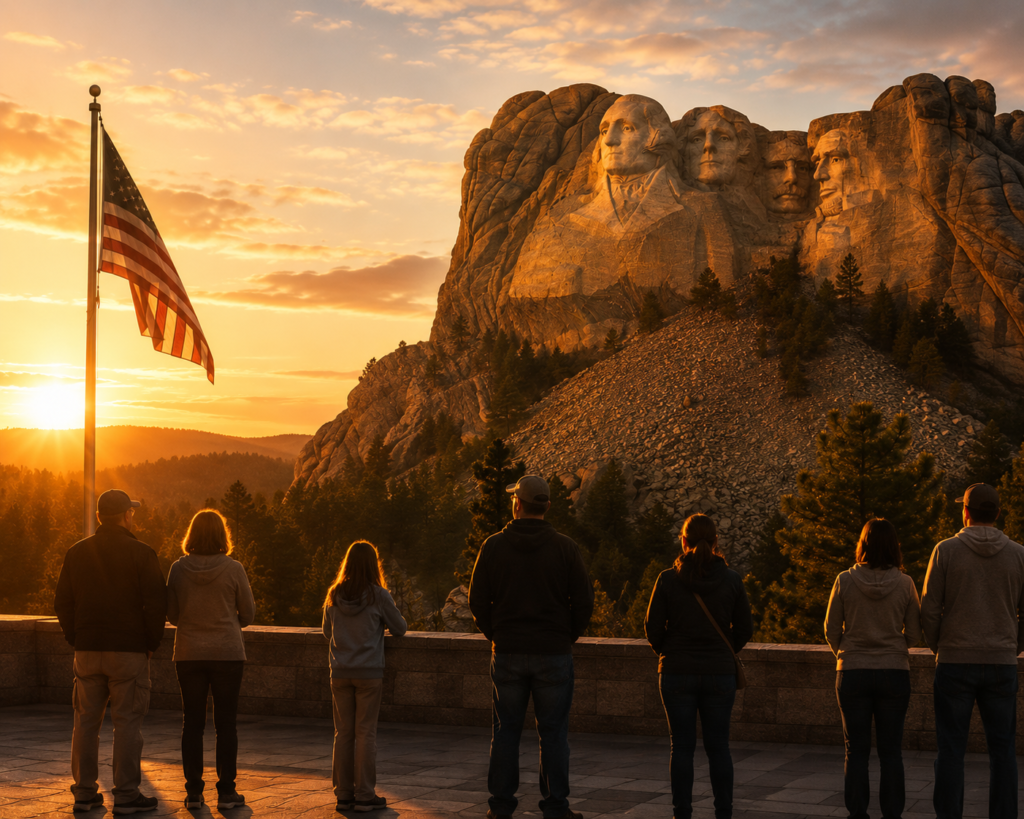
Standing beneath Mount Rushmore, it is easy to be impressed by the monument’s size. Yet after discovering the vision that inspired it, the people who built it, and the symbolism behind its four familiar faces, visitors often leave with something even more meaningful than photographs. They leave with a deeper understanding of the story the mountain was created to tell.
That is the enduring power of Mount Rushmore National Memorial. It is more than one of America’s most recognizable landmarks. It is a place where vision, artistry, engineering, and history come together to remind us how the past continues to shape the present.
Whether Mount Rushmore is your destination or the beginning of a broader journey through the Black Hills, its story is only the first chapter. The monument’s hidden history, the remarkable people who created it, and the surrounding landscapes offer countless opportunities to continue exploring one of America’s most fascinating regions.
Because the most memorable journeys don’t end when you leave a historic place—they begin when you understand the stories that give it meaning.
Official Resources
- National Park Service – Mount Rushmore National Memorial
The official source for the monument’s history, operating hours, accessibility information, ranger programs, and current conditions. - Mount Rushmore National Memorial (NPS History & Culture)
Additional information about the monument’s construction, Gutzon Borglum, and the people behind the project. - South Dakota Tourism – Mount Rushmore & Black Hills
Helpful for visitors planning a broader Black Hills itinerary, including nearby attractions and travel ideas.