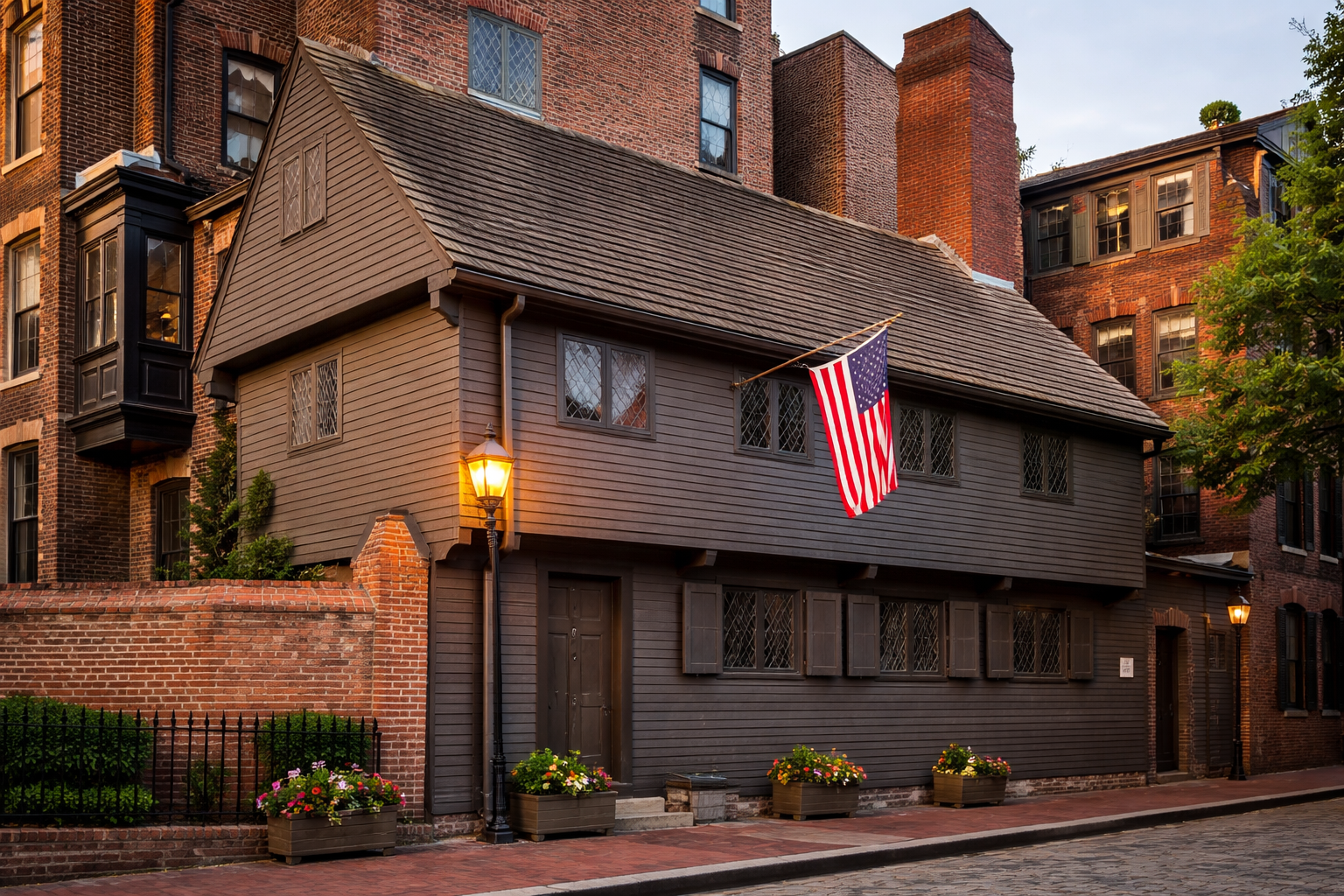
Paul Revere House
Why This Place Matters
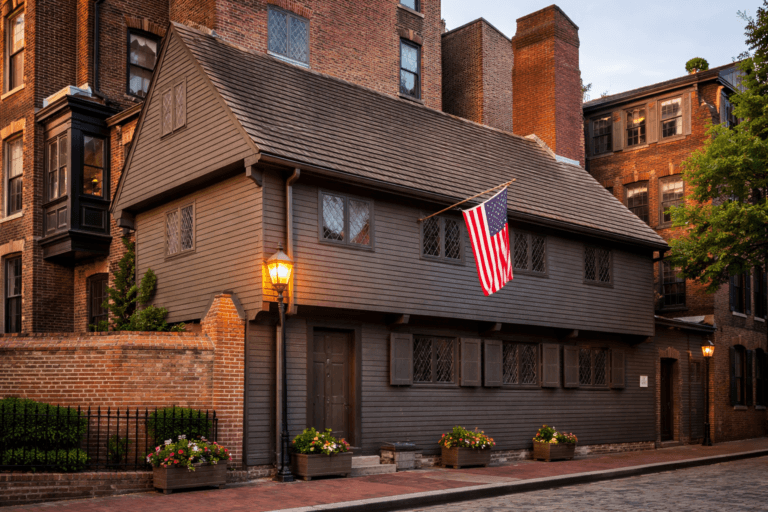
The Paul Revere House matters not because it commemorates a single dramatic moment, but because it preserves the everyday reality of life in Revolutionary Boston. Built around 1680, it is the oldest surviving residential structure in downtown Boston—older than the nation itself—and one of the few places where domestic life from the Revolutionary era can still be experienced at human scale.
Paul Revere lived here with his family during the most turbulent years leading up to the American Revolution. At the time, Boston was a city under military occupation, shaped by trade, dense neighborhoods, and constant political tension. This house was not intended as a monument. It was a working home in a working neighborhood—embedded in a city where news, ideas, and loyalties moved quickly from door to door.
What gives the Paul Revere House its lasting significance is its ordinariness. It anchors history in lived experience.
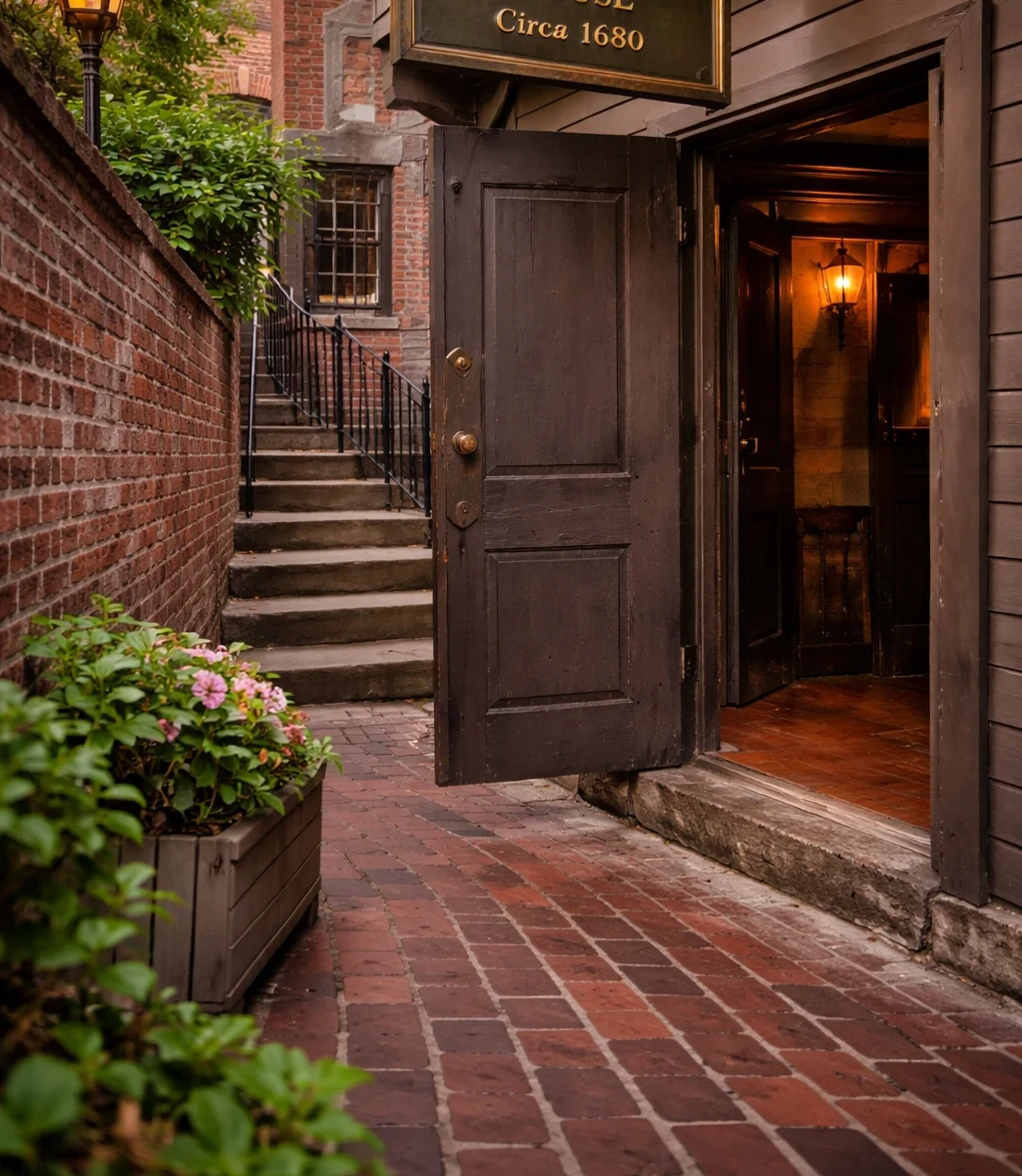
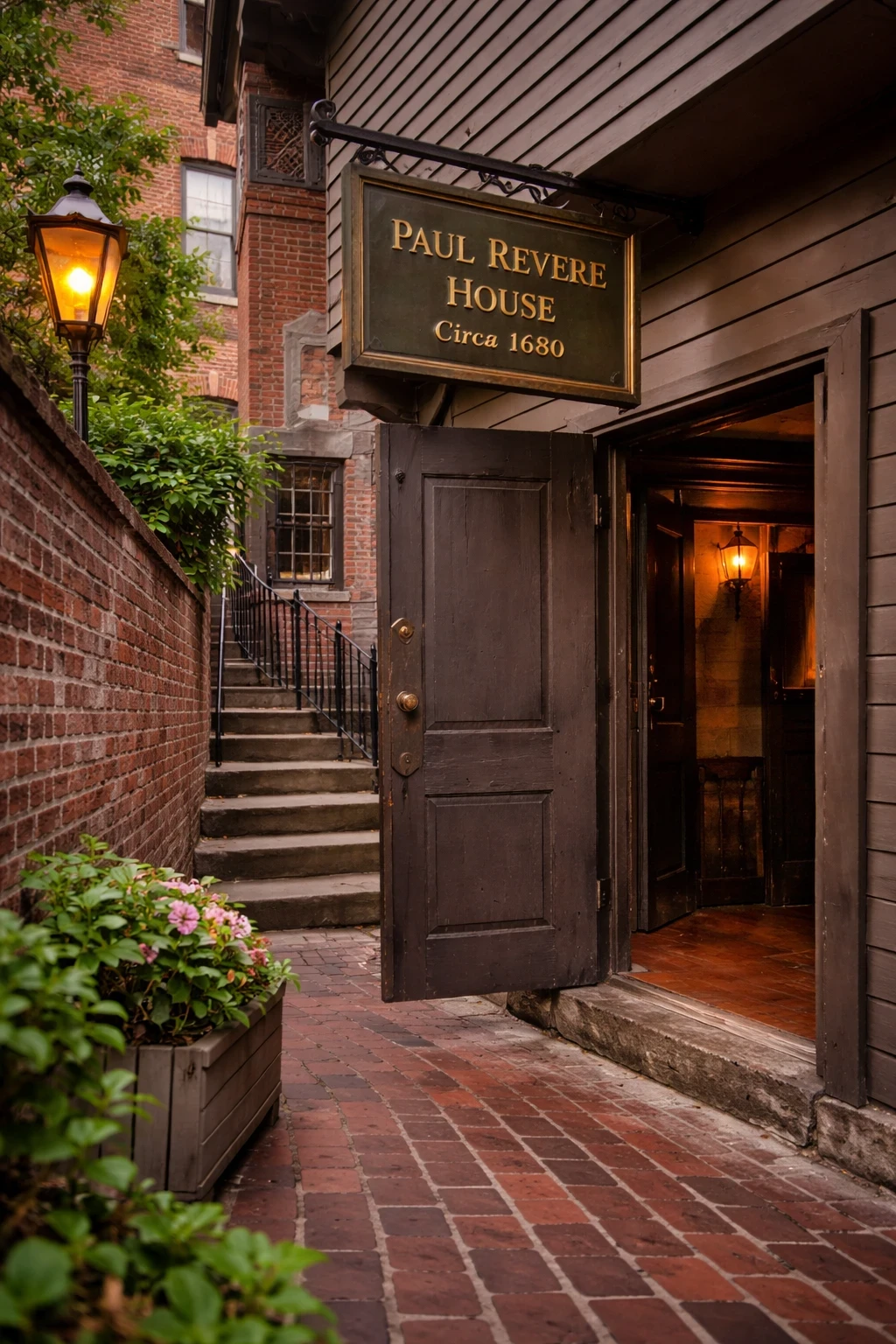 The entrance to the Paul Revere House marks the transition from the busy streets of the North End into one of Boston’s oldest surviving homes.
🧭 Visiting Basics / Before You Go
A visit to the Paul Revere House is intentionally focused and intimate. Because the interior spaces are small, access is typically managed to preserve the structure and ensure a meaningful experience for visitors.
Most visits are self-guided, supported by knowledgeable staff who help interpret the space and answer questions. The experience is relatively brief, making it easy to combine with other nearby historic exploration.
Details such as hours, seasonal availability, and admission policies can change, so visitors are encouraged to check the official site shortly before planning their visit.
♿ Accessibility & Practical Considerations
As one of Boston’s oldest surviving homes, the Paul Revere House presents several practical limitations typical of early urban dwellings:
- Narrow, steep stairs to access upper levels
- Uneven floors reflecting original construction methods
- Small rooms with limited capacity
- Minimal seating inside the house
These features are essential to the house’s authenticity and should be considered when planning a visit.
🏛 Understanding the House Before You Visit
The Paul Revere House reflects layers of architectural change rather than a single preserved moment. Its structure combines medieval English building traditions with later colonial adaptations, shaped over time by shifting needs and ownership.
The layout is compact and utilitarian. Rooms served multiple purposes, accommodating family life, work, and storage within a limited footprint. This was not a decorative home—it was a functional urban residence, closely tied to the rhythms of labor and neighborhood life.
Understanding this context helps visitors read the space accurately, recognizing intention where modern eyes might otherwise see simplicity.
 Exposed beams and a steep wooden staircase reflect the practical design and craftsmanship of early colonial homes like the Paul Revere House.
📜 The Stories That Live Here
Paul Revere is often remembered solely for his midnight ride, but his daily life was grounded in craftsmanship, family responsibility, and community ties. A skilled silversmith and engraver, Revere balanced political involvement with the demands of supporting a large household.
The house also tells a longer story beyond Revere’s occupancy. Over time, it passed through multiple owners and uses, reflecting Boston’s changing economic and cultural landscape. By the early 20th century, the structure faced possible demolition—a fate avoided only through deliberate preservation efforts.
Its survival speaks not only to Revere’s legacy, but to evolving ideas about historical memory and civic responsibility.
👁 What Not to Miss
Although modest in scale, the Paul Revere House rewards careful attention. Visitors may wish to linger on:
- The tight proportions of the rooms, illustrating how closely daily life was lived
- Structural details that reveal centuries of adaptation and repair
- Interpretive elements that emphasize Revere’s identity as a working craftsman, not just a symbolic figure
These details ground the experience in reality rather than legend.
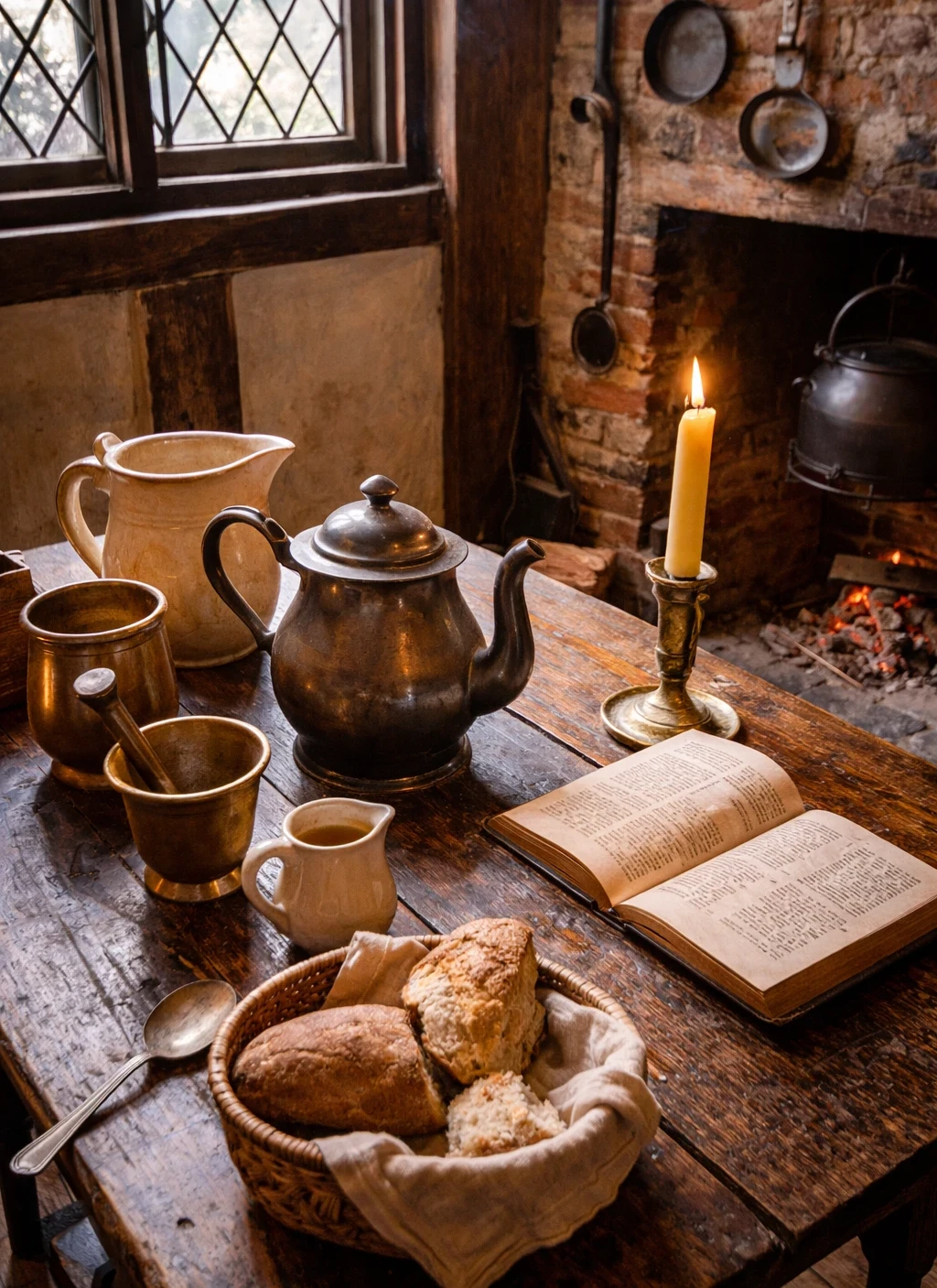 Everyday household objects help interpret daily life inside the Paul Revere House, offering a glimpse into how meals were prepared and shared in early Boston homes.
🎧 Experiencing the Site Thoughtfully
Because the house is small, a slower pace enhances the visit. Allowing time to listen, observe, and ask questions helps the space speak for itself.
Photography policies may be limited indoors, and visitors are encouraged to remain mindful of others sharing the space. This is a site best experienced through attention rather than accumulation.
Extending the Visit Thoughtfully
The Paul Revere House is best understood as part of a larger historical landscape rather than a stand-alone destination. The surrounding streets, nearby landmarks, and layered neighborhoods help explain how Boston functioned as a city on the brink of revolution.
For readers who wish to explore that broader context—through nearby historic sites, cultural spaces, and landscapes that shaped daily life—we’ve gathered those experiences into a dedicated companion guide.
→ See: Things To Do Nearby
(internal link to companion article)
This approach allows visitors to extend their exploration without losing focus or rushing the experience.
🏨 Places to Stay Nearby
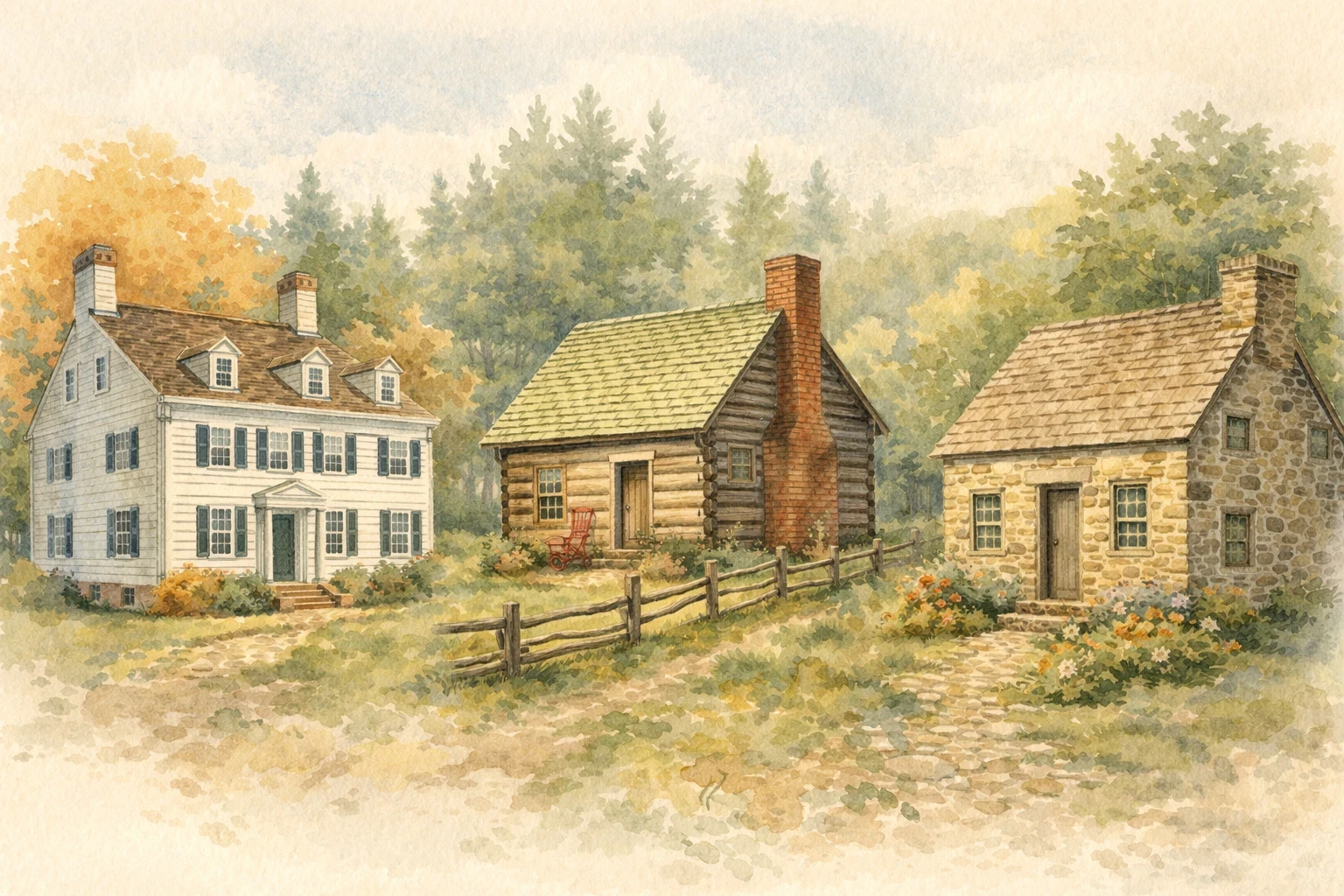 For heritage travelers who value walkability, character, and a sense of place, several lodging options near the Paul Revere House offer a comfortable base for exploring Boston’s historic core:
- Harborside Inn – A modest, well-located option near the waterfront and historic downtown.
- Omni Parker House – A long-standing Boston hotel with deep historical associations and a central location.
- XV Beacon – A small Beacon Hill property appealing to travelers who enjoy historic neighborhoods and quieter surroundings.
- Clarendon Square Bed and Breakfast – A welcoming bed and breakfast offering a more personal, residential experience.
Staying nearby allows visitors to experience the city gradually—moving through it much as earlier residents once did.
If you’d prefer a single place to compare availability, pricing, and nearby options, you can also explore current accommodations in the area through Booking.com.
Visiting the Paul Revere House is less about checking off a landmark and more about stepping briefly into the rhythms of an earlier Boston. Whether you spend a few quiet moments inside or linger to explore the surrounding streets, the experience rewards attention rather than haste. It’s a reminder that history often speaks most clearly when we allow ourselves the time to listen.